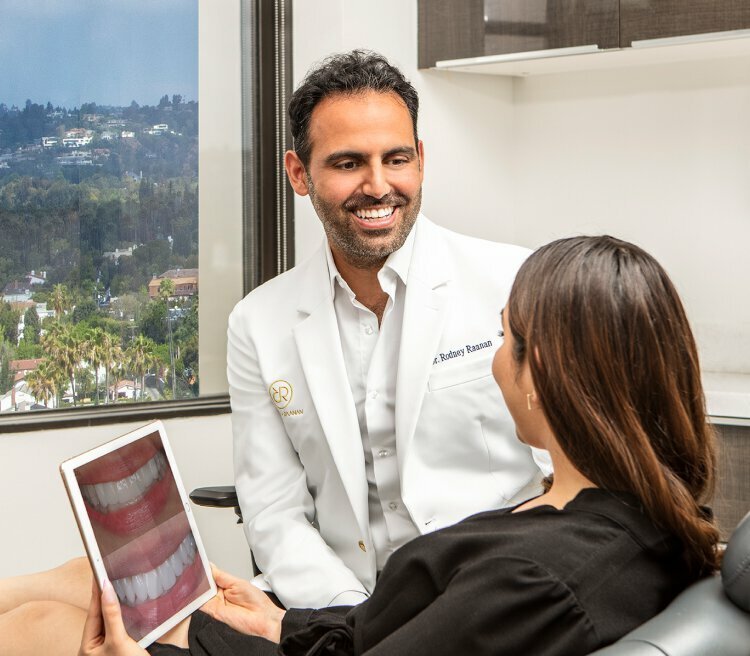
If you’ve spent any time in my Los Angeles office discussing your smile, you know I have a profound appreciation for precision. I don’t just see teeth; I see the entire picture—the lips, the underlying bone, the gum tissue, and the intricate way they all frame your smile.
You might be wondering why a periodontist, a specialist in the gums and the underlying bone, seems so focused on something as minute as the shape of your gum line. The answer is simple: Aesthetic perfection lives in the details. Specifically, it lives in the millimeters. This isn’t just about making your smile look “better;” it’s about achieving a level of symmetry, health, and harmony that transforms your entire appearance.
My team and I are genuinely obsessed with millimeter-perfect gum contouring—and for good reason. It is the final, essential step in unlocking the most confident and radiant version of your smile.
The Science Behind Your Smile’s Frame
Overly dominant, it can distract. When a patient comes to me seeking cosmetic improvements, the conversation often starts with the teeth. But as a periodontist, I immediately shift focus to the surrounding architecture. Think of your gums as the frame of a masterpiece painting. If the frame is too thick, uneven, or overly dominant, it can distract from the art.
The issue many people face is what we often call a “gummy smile,” or “Excessive Gingival Display“. This occurs when the gum tissue covers too much of the tooth crown or when the underlying bone structure is positioned in a way that makes the teeth appear short and square.
My obsession with the millimeter begins here. When I plan an aesthetic correction, I am guided by established principles of facial and dental esthetics. For example, my initial evaluation always involves checking the proportions of your teeth.
Scientific esthetic principles have shown that the ideal visible width-to-height ratio for the two front central teeth (maxillary central incisors) should be approximately 80% to 85%. If the gum line covers even one millimeter too much, that ratio is destroyed, and the tooth appears squat and unnatural. Correcting that single millimeter can change a tooth from appearing short and square to long and naturally elegant.
The Biological Width: A Crucial Scientific Fact
When we perform gum contouring, we are not just trimming tissue; we are fundamentally reshaping the relationship between the tooth, the gum, and the bone. This requires a deep understanding of what we call the biological width.
Here is a critical scientific fact: Healthy gum tissue must maintain a biological width of approximately 3 millimeters around the tooth to remain stable and healthy over the long term. This 3mm zone is the space occupied by the junctional epithelium (a type of tissue attachment) and the underlying connective tissue fibers.
If I, as your periodontist, fail to respect this biological space, two things can happen:
- The gums will try to grow back, attempting to re-establish the correct 3mm distance, which ruins the cosmetic result.
- The tissue surrounding the tooth will become inflamed, leading to chronic redness, swelling, and potential bone loss.
This is why precision is non-negotiable. I am constantly measuring, re-measuring, and calculating to ensure that when the contouring is complete, the gums are not only beautiful but also placed in a position that guarantees their long-term health, integrating function and esthetics perfectly.
Precision in Practice: My Toolkit for Perfection
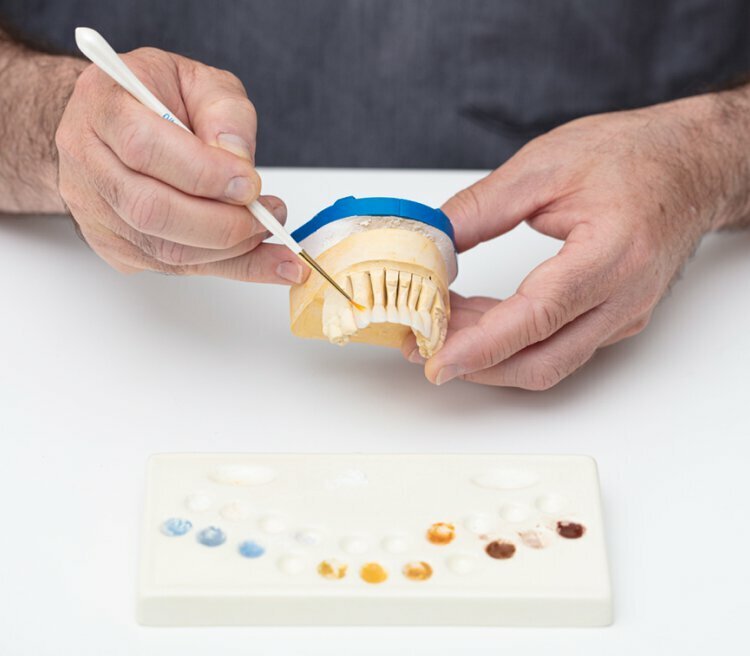
The days of using only a scalpel for this type of delicate work are largely behind us. Modern periodontics employs sophisticated technology that allows for millimeter-level control, as I demand.
My preferred technique often involves the use of advanced soft-tissue lasers. The laser allows me to perform the procedure with incredible accuracy. I can gently reshape the gum tissue, often with less bleeding and faster healing times than traditional methods. The laser energy precisely sculpts the gum margin, creating the ideal arc and curve around each tooth.
However, laser work is only part of the story. Sometimes, the problem is not just the soft tissue (the gum) but the underlying bone structure. In these cases, to achieve a stable and lasting correction, I must perform a procedure known as osseous crown lengthening or functional crown lengthening. This procedure involves gently reshaping the bone that surrounds the tooth root.
Why is this essential? If I only remove the excess gum tissue but leave the bone too high, the gum will inevitably grow back. By removing a slight amount of bone, I create a new, lower bone level, which allows the gum tissue to settle healthily into its new, ideally contoured position. This dual-action approach—tissue and bone—is what guarantees results that last for decades.
Patient-Reported Success: It’s More Than Just Looks
While the technical precision is paramount to me, the ultimate goal is always the patient’s well-being. A perfectly contoured smile doesn’t just look better in photos; it also changes how people perceive themselves.
Research consistently demonstrates that aesthetic dental treatments, including gum contouring and crown lengthening, lead to a significant improvement in patient self-confidence and overall quality of life. Patients report feeling less self-conscious when speaking, laughing, and smiling in public. A study published in a reputable dental journal found that post-treatment patients reported a statistically significant improvement in social relationships and emotional well-being because they no longer felt the need to hide their smiles.
I have found this to be true time and again in my practice. The functional results are excellent, but the emotional reward for my patients is truly immeasurable.
To illustrate this effect, I’ve outlined some typical patient-reported results below:
| Satisfaction Metric | Pre-Treatment Average Score (1-10) | Post-Treatment Average Score (1-10) |
| Esthetic Appeal | 4.5 | 9.1 |
| Confidence in Public | 5.2 | 9.3 |
| Overall Quality of Life | 6.0 | 8.9 |
| Chart based on generalized patient-reported outcome data following esthetic gum contouring. |
Connecting the Esthetics to Comprehensive Health
It is important to remember that as a periodontist, my focus is never purely cosmetic. When I reshape the gum line, I am simultaneously ensuring the optimal health of the periodontal tissues. Aesthetic improvements often go hand in hand with improved oral hygiene. When the gums are contoured correctly, they are usually easier to clean, which reduces the risk of future issues, such as periodontal disease and inflammation.
This is the central philosophy of my practice: Health drives beauty, and beauty encourages health.
I encourage you to learn more about the latest standards in oral health care and cosmetic procedures. Trustworthy resources like the American Dental Association (ADA) are excellent places to start your research on dental health standards (you can learn more about proper gum care on their website: https://www.ada.org/). Furthermore, for more in-depth scientific literature on periodontal plastic surgery, I often refer patients to resources from the National Institutes of Health (NIH), which maintains extensive archives on the latest research (https://www.nih.gov/).
If you are tired of a smile that feels “gummy” or teeth that look too short, I invite you to schedule a comprehensive consultation. I will use my millimeter-perfect precision to craft a gum line that not only looks stunning but also provides a foundation for lifelong dental health.
Your best smile starts with a healthy, harmonious frame.
Ready to see the difference precision can make? Explore our services and book your consultation today: Dr. Rodney Raanan Home Page.