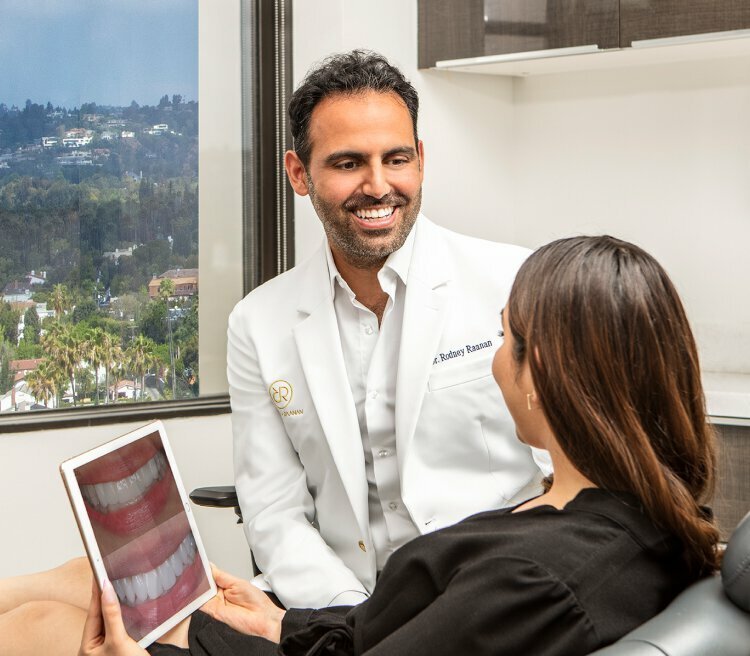
As a cosmetic dentist, I meet amazing people every single day who have spent years, sometimes decades, hiding their smiles. They have tried every over-the-counter whitening strip, every expensive “pro” toothpaste, and even professional laser treatments, yet their teeth remain a stubborn shade of grey or brown. If this sounds like your story, I want you to know that it is not your fault, and it is not a lack of hygiene. You are likely dealing with Tetracycline Stains.
I understand the frustration of looking in the mirror and feeling like your smile doesn’t match the vibrant person you are on the inside. Many of my patients come to me feeling defeated because they believe their teeth are simply “unfixable.” I am here to tell you that is absolutely not true. While traditional methods fail, we have a solution that works beautifully.
In this post, I want to explain exactly why those stubborn stains won’t budge with bleaching and how we can use custom porcelain veneers to give you the bright, natural-looking smile you have always deserved.
Understanding the Source: What Are Tetracycline Stains?
To understand why we can’t just “clean” these stains away, we have to look at where they come from. Unlike the stains we get from drinking coffee, red wine, or eating berries—which sit on the surface of the enamel—tetracycline staining happens deep inside the tooth structure.
Tetracycline is a powerful antibiotic. Decades ago, it was commonly prescribed to treat various infections. However, we later discovered that if this medication was taken while teeth were still forming (either by a mother during pregnancy or by young children), the drug actually bound itself to the calcium in the teeth. This resulted in intrinsic discoloration.
This isn’t just a surface spot. The discoloration is embedded into the dentin, the layer underneath your enamel. These stains often show up as horizontal bands of color ranging from yellow to dark brown or even blue-grey. Because the enamel is translucent, that dark dentin shows right through, creating a shadow that brushing cannot remove.
According to research, the severity of the staining depends on the dosage and the duration of the medication use, but even mild cases can be incredibly resistant to standard whitening procedures.
Why Bleaching Usually Fails You
I often hear patients say, “I spent hundreds of dollars on Zoom whitening, and my teeth look exactly the same.” This is a heartbreaking realization, but there is a scientific reason for it.
Teeth whitening products use peroxide-based agents to break apart stain molecules. These agents are fantastic at breaking down organic stains on the surface or just slightly below the enamel. If you have yellowing from years of coffee drinking, bleaching works wonders. However, bleaching agents have a very hard time penetrating deep enough to reach the dentin where tetracycline compounds are locked in.
The “Blue-Grey” Problem
Even when deep bleaching is attempted, it often creates a new problem. Bleaching tends to make the enamel more translucent and whiter. If you have a dark grey or blue underlayer (the dentin) and you make the top layer (enamel) more see-through, the dark color can actually appear more prominent or result in a “ghostly” grey appearance rather than a bright white. It is like trying to hide a dark wall by painting it with a thin, watery layer of white paint; the darkness still shows through.
The Winning Solution: Porcelain Veneers
If we cannot bleach the dark color out, we have to mask it. This is where my expertise in cosmetic dentistry comes into play. The most effective, long-lasting, and beautiful solution for Tetracycline Stains is the placement of porcelain veneers.
Think of a veneer as a contact lens for your tooth, but made of high-quality, durable porcelain. Unlike a contact lens, however, veneers are custom-made to hide the darkness underneath while mimicking the light-reflecting properties of natural teeth. We bond them permanently to the front of your teeth, instantly changing their color, shape, and overall appearance.
Why Veneers Are Different
Veneers do not rely on chemical reactions to lighten your tooth structure. Instead, they provide a physical new surface. This allows us to have complete control over the final shade of your smile. Whether you want a “Hollywood White” or a softer “Natural White,” we can achieve it regardless of how dark your natural teeth are underneath.
The Challenge of Masking Dark Stains
I want to be transparent with you: covering tetracycline discoloration is one of the most difficult tasks in cosmetic dentistry. It requires a high level of artistry and technical skill. Why? Because we have a conflict of interest between “masking” and “natural beauty.”
- The Opacity Issue: To block out a dark grey tooth, the porcelain needs to be somewhat opaque (solid).
- The Natural Look: Natural teeth are translucent (light passes through them). If a veneer is too opaque, it looks fake, flat, or “Chiclet-like.”
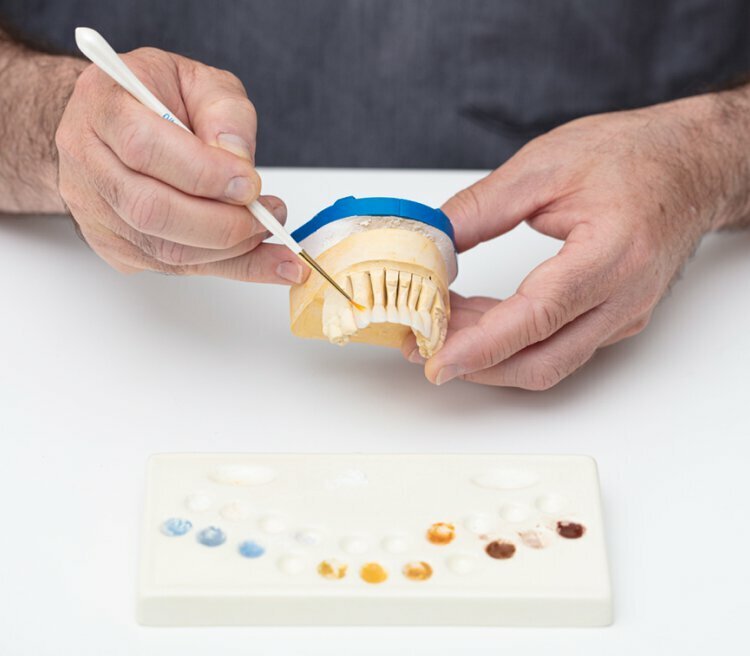
My approach involves using specialized layering techniques. We use materials that have a “block-out” core to hide the grey, layered with translucent ceramics on top to bring back the life and sparkle of a natural tooth. This gives you the brightness you want without that artificial, matte appearance.
The Process: Transforming Your Smile
When you come to my office to fix Tetracycline Stains, we don’t just jump into drilling. We plan everything meticulously to ensure you love the result.
1. The Consultation and Design
First, we talk. I want to know your goals. We take digital scans and photos of your current smile. I analyze your facial features, skin tone, and lip line. We aren’t just fixing teeth; we are designing a smile that fits you.
2. The “Trial Smile”
This is my favorite part. Before we make anything permanent, I can create a temporary mockup. You get to test-drive your new smile. This is crucial for tetracycline cases because it allows us to check if the thickness of the veneers is sufficient to hide the underlying grey without feeling bulky in your mouth.
3. Preparation and Placement
To place the veneers, I usually remove a tiny amount of enamel—sometimes as thin as a contact lens. This is necessary to create room for the porcelain so your teeth don’t look thick. Once your custom veneers are crafted by our master ceramists, I bond them to your teeth using high-strength resin cements. We can even use specific shades of cement to further help neutralize the dark color underneath.
Data That Supports This Choice
I know making the decision to get veneers is a big step, so it helps to look at the facts regarding their success and longevity.
Data Point 1: According to a systematic review of clinical studies, porcelain veneers have a very high survival rate. Research indicates that approximately 91% to 93% of porcelain veneers survive after 10 years, and many last up to 20 years with proper care. This makes them a fantastic long-term investment for your confidence.
Data Point 2: In the context of patient satisfaction for treating intrinsic stains (like tetracycline), studies show that patients rate restorative treatments (like veneers) significantly higher than bleaching treatments. In severe staining cases, satisfaction with bleaching can be as low as 50% due to relapse or insufficient lightening, whereas veneer satisfaction consistently polls above 90% when performed by an experienced cosmetic dentist.
For more detailed information on how intrinsic stains affect tooth structure, you can read this comprehensive article from the National Center for Biotechnology Information (NCBI) regarding tooth discoloration and management.
Caring for Your New Smile
Once we have successfully masked the Tetracycline Stains, maintaining your new smile is actually quite easy. Porcelain is highly resistant to staining. That red wine and coffee that used to scare you? You can enjoy them again without worrying about ruining your smile instantly.
Maintenance is simple:
- Brush twice a day with a non-abrasive toothpaste.
- Floss daily to keep the gums around the veneers healthy.
- Visit me for your regular cleanings and check-ups.
- Wear a nightguard if you grind your teeth, to protect the porcelain from chipping.
Life Beyond the Stains
I have seen the emotional transformation that happens when a patient looks in the mirror and sees a white, bright smile for the first time in their life. It is not just about vanity. It is about feeling free to laugh without covering your mouth. It is about walking into a job interview or a date with confidence.
Tetracycline staining is a difficult condition, but it does not have to be a life sentence for your smile. Bleaching might have failed you in the past, but that was simply the wrong tool for the job. With modern porcelain veneers, we can mask the past and design a future where your smile is your greatest asset.
If you are tired of hiding your teeth and want to explore how we can customize a solution for you, I invite you to come in and see me. Let’s create a smile that truly reflects who you are.