You looked in the mirror expecting to see the smile of your dreams. You spent time and money hoping for a transformation that would boost your confidence. Instead, you feel a heavy pit in your stomach. Perhaps your teeth look too big for your mouth, the color is flat and opaque, or your gums are red and irritated. If this sounds familiar, you are likely dealing with what we call “botched veneers.”
Please know that you are not alone in this frustration. A significant portion of the work I do involves fixing bad veneers and correcting dental work that simply didn’t turn out right the first time. It is heartbreaking to see patients hide their smiles because previous cosmetic work looks unnatural or bulky. However, there is good news. We can fix this. We can reverse the damage, restore your oral health, and finally give you the natural, beautiful smile you originally wanted.
Identifying the Problem: What Went Wrong?
Before we talk about the solution, it is important to understand why your veneers might look or feel wrong. Cosmetic dentistry is a unique blend of art and science. When one of those elements is missing, the results suffer. In my experience, most unhappy patients are dealing with one or a combination of the following issues.
The “Chiclet” or Bulky Appearance
This is the most common complaint I hear regarding fixing bad veneers. When veneers are made too thick or are not properly contoured to the natural curve of your teeth, they can look like “Horse Teeth” or “Chiclets.” They lack the delicate definition of natural teeth. This usually happens when the dentist or the ceramist (the person making the porcelain) does not understand the nuances of tooth anatomy. Real teeth are not flat blocks; they have curves, textures, and varied thicknesses.
Unnatural, Monochromatic Color
Many people think that “cosmetic dentistry” just means making teeth as white as possible. This is a mistake. Natural teeth have a gradient of color. They are slightly more saturated near the gum line and become more translucent (see-through) at the biting edge. If your veneers are one solid block of opaque white, they will not reflect light like real enamel. This creates a “fake” look that is instantly noticeable to others.
Gum Inflammation and Hygiene Issues
This issue is not just cosmetic; it is a health concern. If veneers are not bonded perfectly flush with your tooth, they create a “ledge” near the gum line. This ledge traps bacteria and plaque, leading to chronic gum redness, bleeding, and bad breath. Furthermore, if the veneers violate the “biological width” (the necessary distance between the restoration and the bone), your body will fight against them, causing constant irritation.
- Red or purple gums: A sign of chronic inflammation.
- Bleeding when brushing: Often caused by rough margins on the veneers.
- Sensitivity: If the bite isn’t balanced, your teeth may hurt when you chew.
The Revision Process: How We Fix Bad Veneers
Fixing bad veneers is generally more complex than placing them for the first time. It requires a high level of expertise, patience, and precision. My approach is comprehensive because I want to ensure we get it 100% right this time. Here is how we approach the revision process.
Step 1: The Detailed Analysis
We start by listening. I need to know exactly what you dislike about your current smile. Is it the shape? The color? The way your lips drape over your teeth? We also take detailed digital scans and photographs. We analyze your bite (occlusion) to ensure that functional issues aren’t contributing to the problem. If your previous veneers are popping off or chipping, it is often because your bite forces are not balanced.
Step 2: Careful Removal
Many patients are terrified that removing veneers will damage their underlying teeth. I want to reassure you that we use specialized laser technology and magnification to carefully remove the old porcelain. My goal is to be as conservative as possible, preserving your natural tooth structure underneath. We treat your natural teeth with the utmost respect during this transition phase.
Step 3: The “Test Drive” with Temporaries
This is arguably the most critical step in fixing bad veneers. After removing the old work, I will design a new set of provisional (temporary) veneers. These are not just placeholders; they are a prototype of your new smile. You will wear these temporaries for a few weeks.
During this time, you get to “test drive” your new look. We check everything:
- Speech: Do you have a lisp? If so, we adjust the length.
- Aesthetics: Is the smile wide enough? Is the color natural?
- Comfort: Does your bite feel balanced?
We do not move to the final porcelain until you are completely in love with the temporaries. This eliminates the guesswork and ensures there are no surprises when the final veneers are placed.
The Art of Natural Porcelain
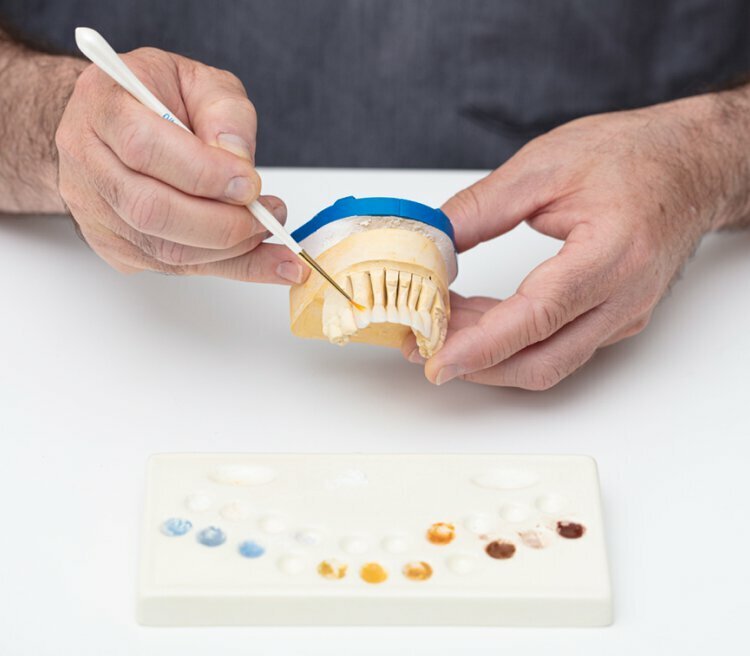
Once we have perfected the design in the temporary phase, we communicate those exact specifications to our master ceramist. This is where the magic happens. To avoid the bulky, opaque look of your previous set, we use high-grade ceramics that mimic the optical properties of natural enamel.
We focus heavily on translucency and texture. By layering different shades of porcelain, we create a depth of color that looks alive. We also add subtle surface texture. If you look closely at a natural tooth, it isn’t perfectly smooth like glass; it has tiny grooves and ridges that scatter light. Replicating this texture is key to making the veneers look undetectable.
Data That Matters
It is interesting to note the trends in our industry. According to recent market analysis, the global cosmetic dentistry market is expected to continue growing significantly, driven largely by the demand for veneers and smile makeovers. However, with this rapid growth comes an increase in inexperienced providers. Data Point 1: Industry reports suggest that revision cases—fixing work done elsewhere—now make up a substantial percentage of appointments for top-tier cosmetic specialists. This highlights the importance of choosing the right provider from the start.
Why Specialist Care Matters
General dentistry and cosmetic dentistry are different disciplines. While a general dentist fixes cavities and maintains overall health, a cosmetic specialist focuses on the aesthetics and symmetry of the face. When fixing unnatural or bulky cosmetic work, we look at the big picture. We consider your face shape, your skin tone, and even your personality.
For example, if you have a rounder face, squared-off teeth might look harsh and masculine. If you have a petite face, large, broad veneers will look overwhelming. We customize the shape of the veneers to harmonize with your features.
Furthermore, the longevity of your veneers depends on the quality of the bonding. Data Point 2: While average veneers might last 10 years, high-quality, properly bonded porcelain veneers can last 15 to 20 years or more with proper care. This makes investing in revision work not just an aesthetic choice, but a financial one for the long term.
For more information on the standards of excellence in our field, I recommend reading resources from the American Academy of Cosmetic Dentistry (AACD). They set the bar for ethical and artistic standards in our profession.
Regaining Your Confidence
The emotional toll of a bad smile makeover is real. Patients often tell me they stopped smiling in photos or cover their mouths when they laugh because they are embarrassed by their “new” teeth. That is not how you should live. The goal of veneers is to enhance your life, not complicate it.
When we finish the revision process, the reaction is usually emotional. Seeing a patient look in the mirror and cry tears of joy because they finally see the person they recognize—that is why I do what I do. The bulkiness is gone. The gray gum lines are gone. All that remains is a bright, healthy, and incredibly natural smile.
Addressing the Fear of “Doing It Again”
I understand that if you have been burned once, you are hesitant to trust again. You might worry that fixing them will just make things worse or that it will be painful. My philosophy is centered on patient comfort and trust. We take it slow. We explain every step. Because you get to wear the temporaries and approve the design before the final bonding, you remain in control of the outcome. We do not glue anything permanently until you say, “Yes, this is perfect.”
Your Next Steps to a Corrected Smile
If you are unhappy with your veneers, you do not have to settle. Living with bulky, unnatural, or irritating dental work can affect your gum health and your self-esteem. The first step to fixing bad veneers is a consultation where we can honestly assess what went wrong and map out a plan to make it right.
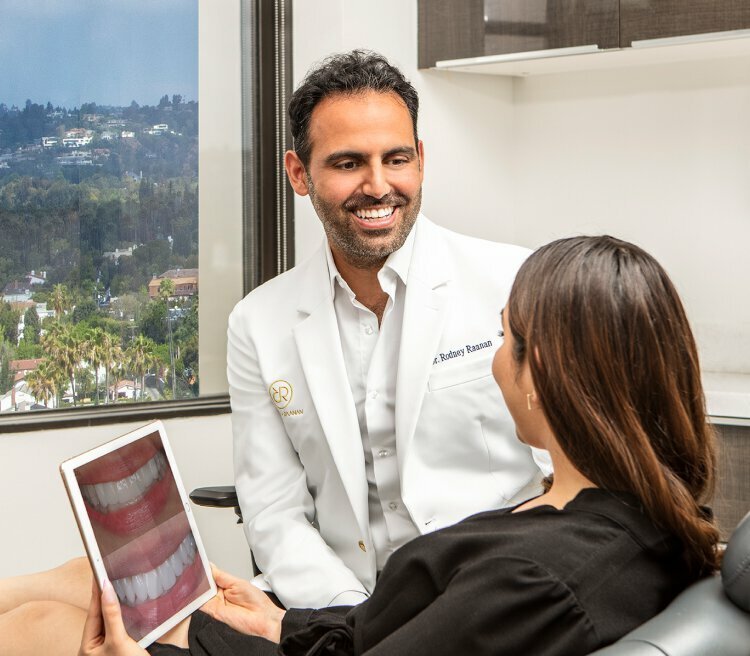
We use the latest imaging technology to show you what is possible. We discuss the health of your gums and bite to ensure the foundation is solid. Then, we craft a smile that is uniquely yours—not a cookie-cutter design, but a bespoke work of art.
You deserve to love your smile. Let’s correct the past and design a future where you can smile freely, confidently, and naturally. I am ready to help you on this journey.