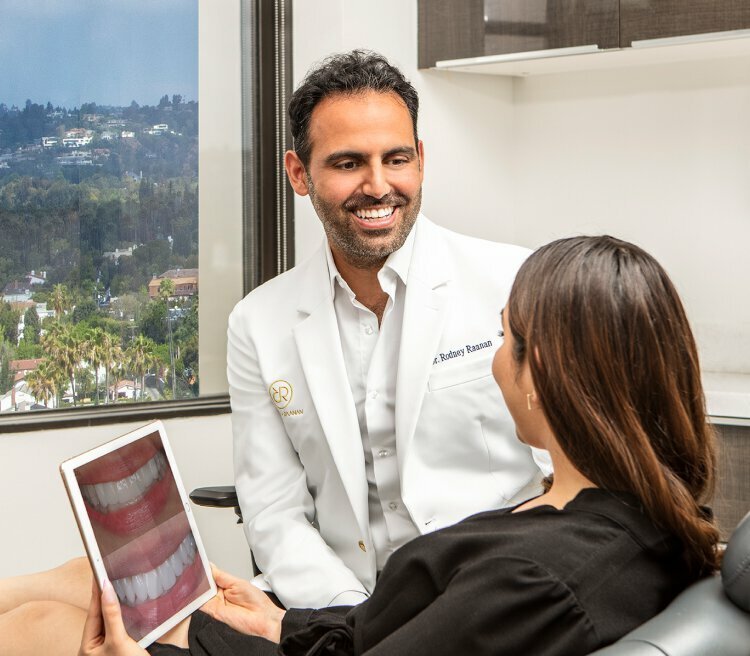
When patients walk into my practice, they often have a specific goal in mind: a brighter, more radiant smile. It is one of the most impactful changes a person can make to their appearance. However, there is a common misconception that the best smile is simply the whitest one possible. As a cosmetic dentist, I spend a lot of time educating my patients that true beauty lies in harmony, not just brightness.
Creating a stunning smile is not about picking the blindingly white shade you see on a filter or a magazine cover. It is about customization. It is about finding a tone that complements your skin, your eyes, and your unique personality. This process is what I call the art of shade matching.
In this guide, I want to walk you through how I approach tooth shade selection and help you understand why the “perfect white” is different for everyone. We will look at the science of color, the artistic elements of smile design, and how we can achieve a look that is both dazzling and undeniably natural.
Understanding That “White” Is Not Just One Color
Before we dive into how to choose a shade, it is important to understand the nature of tooth color. Teeth are not flat, monochromatic objects like a piece of printer paper. They are complex biological structures that interact with light in fascinating ways.
Natural teeth are composed of dentin and enamel. The dentin, which is the inner layer, usually has a yellowish or grayish tone. The enamel, the outer layer, is semi-translucent and acts like a prism. When light hits your tooth, it reflects off the enamel and reveals the underlying color of the dentin. This creates depth and character.
When we look at color in dentistry, we break it down into three dimensions:
- Hue: This is the actual color tone (like yellow, red, or gray). Even white teeth have underlying hues.
- Chroma: This refers to the intensity or saturation of the hue. A tooth with high chroma looks more vivid or intense in color.
- Value: This is the most important factor. Value refers to the brightness or darkness of the tooth. When people say they want “white” teeth, they are usually asking for a high value (brightness).
If we simply ramp up the brightness without considering the translucency and texture, teeth can end up looking like “Chiclets”—opaque, flat, and fake. My goal is to mimic nature while enhancing it.
The Psychology of a Bright Smile
Why do we care so much about the shade of our teeth? It is deeply rooted in psychology and social perception. A bright smile is often associated with youth, health, and vitality. Over time, our teeth naturally darken due to age, dietary habits, and wear. Therefore, restoring brightness is subconsciously viewed as turning back the clock.
According to the American Academy of Cosmetic Dentistry (AACD), 99.7% of adults believe a smile is an important social asset. This data point highlights just how critical our smiles are to our confidence and how others perceive us. When you feel good about your smile, you project confidence, and that energy is contagious.
Factors Influencing Your Perfect Shade
When I sit down with a patient for a consultation, I don’t just look at their mouth. I look at their entire face. Tooth shade selection is a holistic process. Here are the primary factors I consider to ensure the shade we choose looks like it belongs to you.
1. Skin Tone and Undertones
Your skin tone is the canvas, and your smile is the art. The contrast between your skin and your teeth plays a massive role in how white your teeth appear.
- Fair Skin: If you have very fair skin, choosing a shade that is too bleached can wash you out or make your teeth look artificial. We usually aim for cool, crisp whites that define the smile without overpowering your delicate features.
- Medium/Olive Skin: Patients with warmer or olive skin tones have a bit more flexibility. We can go brighter because the warmth of the skin balances the coolness of the white teeth.
- Darker Skin: Darker skin tones offer amazing contrast. This means teeth will naturally appear whiter against the skin. Because of this high contrast, we don’t always need to go to the most extreme bleach shade to achieve a stunning, bright look. A natural white often pops beautifully.
2. The Whites of Your Eyes
This is one of the oldest and most reliable tricks in the book. For the most natural look, the whiteness of your teeth should roughly match the whiteness of the sclera (the white part) of your eyes.
If your teeth are significantly whiter than your eyes, they become the focal point of your face in a distracting way. If they are darker, your smile might look aged. Matching the teeth to the eyes creates a harmonious triangle on your face that is pleasing to the human brain.
3. Makeup and Style Preferences
I often ask my patients about their daily style. Do you wear bold red lipstick? Do you prefer a natural “no-makeup” look? Lipstick shades with blue undertones can make teeth look whiter, while orange-based lipsticks can emphasize yellow tones. Knowing your style helps me guide you toward a shade that fits your lifestyle.
The Tools of the Trade: How We Measure Color
In my office, we rely on precision. We don’t just guess. We use standardized tools to ensure communication is clear between myself, the patient, and my master ceramists (if we are doing veneers).
The most common tool is the shade guide. You have likely seen this before—a plastic tab with various fake teeth arranged by color. The classic VITA shade guide arranges natural tooth colors into four ranges:
- A: Reddish-brownish
- B: Reddish-yellowish
- C: Grayish shades
- D: Reddish-gray
However, modern cosmetic dentistry has evolved past these natural limits. With the rise of professional whitening and porcelain veneers, we now have “Bleach Shades” (often labeled BL1, BL2, BL3, and BL4). BL1 is the absolute brightest, often referred to as “Hollywood White.” While some patients request this, I often advise softening it slightly to BL2 or layering in some translucency to keep it looking classy rather than costume-like.
We also use photography. Taking photos in natural light, as opposed to the harsh yellow light of a regular room, allows us to see the true value of the teeth. Lighting is everything.
For more reading on how professional dental procedures ensure safety and efficacy during these processes, you can read this article on teeth whitening basics from the American Dental Association.
Veneers vs. Whitening: Different Paths to White
The approach to tooth shade selection changes depending on the procedure we are performing. The strategy for natural teeth whitening is different from the strategy for porcelain veneers.
Professional Whitening
When we are whitening natural teeth, we are working with what nature gave you. We are removing stains and lifting the natural pigment. The results depend heavily on your genetics.
Some people have naturally gray undertones that are harder to whiten than yellow undertones. With whitening, we can’t pick a specific shade code (like B1) and guarantee it. We simply aim to get your teeth to their brightest potential natural state. It is a fantastic option for a subtle, refreshed look.
Porcelain Veneers
Veneers offer total control. This is where the true artistry comes in. When I design a smile with veneers, I am not limited by your natural enamel color. We can select the exact hue, value, and chroma.
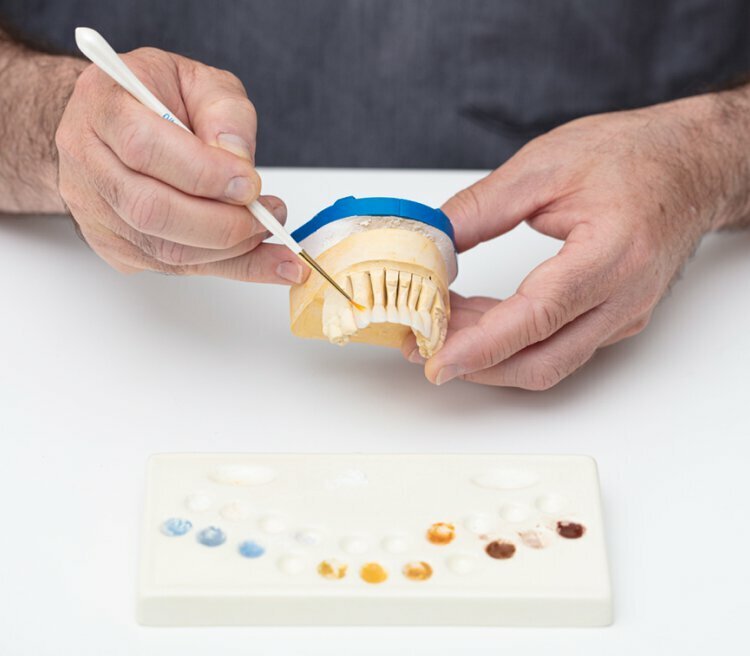
This is where I can add “characterization.” Real teeth are not one solid block of color. They are usually slightly darker near the gum line and more translucent and lighter at the biting edge (the incisal edge). When I work with my ceramist, we layer the porcelain to recreate these subtle gradients. This is how we achieve a smile that is incredibly white but still passes the “is it real?” test.
The “Hollywood White” Debate
I often get asked, “Dr. Raanan, should I just get the whitest shade available?”
My answer is usually a gentle “let’s evaluate.” In the early 2000s, the trend was opaque, blindingly white teeth. Today, the trend has shifted toward “natural perfection.” People want to look like they were born with great genetics, not like they just bought a set of teeth.
If you choose a shade that is too white for your age or skin tone, it can actually have the opposite effect of what you want. Instead of drawing attention to your beautiful smile, it draws attention to the dental work itself. The best dental work is invisible. People should notice you look amazing, but they shouldn’t immediately be able to pinpoint exactly why.
Data supports the rise of this procedure. In recent years, teeth whitening has remained the most requested cosmetic dental procedure, but the demand for custom veneer shading has skyrocketed as patients become more educated about esthetics.
Lighting Conditions Matter
A fascinating aspect of tooth shade selection is metamerism. This is a scientific term meaning that colors can look different under different light sources. A shade that looks perfect under the fluorescent lights of an office might look dull in daylight or too yellow in the warm lighting of a restaurant.
To combat this, I check shades under color-corrected lighting (5500K), which mimics natural daylight. I also encourage patients to walk over to a window with a mirror. I want you to see your smile in the environment where you will actually be living your life, not just in the dental chair.
Maintaining Your Shade
Once we have achieved your perfect shade, keeping it that way requires some effort. If you have natural teeth whitening, the shade will fade over time if you consume staining foods like coffee, tea, red wine, or berries. Periodic touch-up treatments are usually necessary.
Porcelain veneers, on the other hand, are highly resistant to staining. The glaze on the porcelain is non-porous, meaning your coffee habit won’t turn your veneers brown. However, gum recession can reveal the natural tooth structure underneath, which may stain. Therefore, excellent oral hygiene is non-negotiable, regardless of whether you have veneers or natural teeth.
Your New Smile Awaits
Choosing the right white is a collaborative journey. It is a balance of your desires and my professional guidance. Whether you are looking for a subtle enhancement or a dramatic transformation, the goal is always the same: a smile that empowers you.
I believe that every patient deserves a smile that reflects their true self. By paying attention to the nuances of color, skin tone, and facial features, we can craft a result that is uniquely yours. Don’t settle for a generic white. Let’s find your perfect white.
If you are ready to explore the possibilities of tooth shade selection and smile design, I invite you to visit my office. Let’s create something beautiful together.