If you are researching NuVeneers vs porcelain veneers, you are not alone. Every week, patients visit my office asking which option will give them the best smile with the least amount of compromise. I am Dr. Rodney Raanan, DDS MMSc, a Harvard-trained cosmetic dentist and prosthodontist based in Beverly Hills, California. I have placed thousands of veneers over the course of my career, and I created the NuVeneers® technique specifically because I wanted to offer my patients a better path to a beautiful smile. In this guide, I will walk you through the key differences between NuVeneers and traditional porcelain veneers so you can make a confident, informed decision.
What Are Porcelain Veneers?
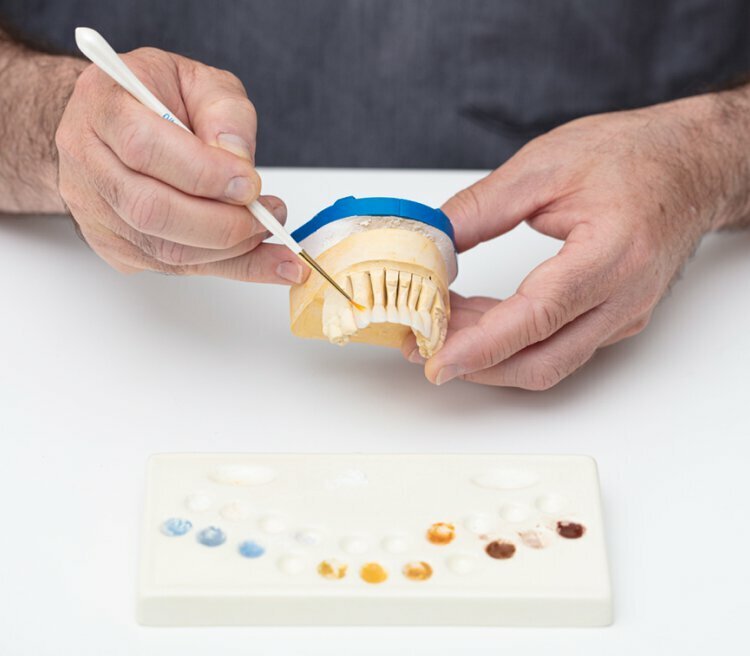
Traditional porcelain veneers are thin shells of dental ceramic that are bonded to the front surface of your teeth. They have been a gold standard in cosmetic dentistry for decades. The process typically requires your dentist to remove a layer of natural tooth enamel — usually about 0.5 to 0.7 millimeters — so the veneer sits flush with your surrounding teeth. Once the tooth is prepared, an impression is taken, temporary veneers are placed, and custom porcelain shells are fabricated in a dental laboratory. At a second appointment, the permanent veneers are cemented into place.
Porcelain veneers offer excellent aesthetics. They resist staining, mimic the light-reflecting properties of natural enamel, and can last 10 to 15 years or longer with proper care. According to a systematic review published in the Journal of Dentistry, the survival rate of porcelain laminate veneers is approximately 95.7 percent at 10 years (Öztürk et al., 2013). That is a strong track record, and it is one reason porcelain veneers remain popular in Beverly Hills, California and around the world.
What Are NuVeneers®?
NuVeneers® is a proprietary minimally invasive veneer technique that I pioneered exclusively at my Beverly Hills practice. The core philosophy behind NuVeneers is simple: preserve as much of your natural tooth structure as possible while still delivering a stunning, long-lasting result. Instead of aggressively removing enamel, NuVeneers involve ultra-thin, custom-crafted porcelain shells that require little to no tooth reduction. In many cases, I can place them with zero drilling.
Because NuVeneers are designed to work with your existing teeth rather than replace large portions of enamel, the procedure is often more comfortable, faster, and more conservative. Patients appreciate that their natural teeth remain largely intact underneath, which gives them more options in the future if they ever need retreatment.
NuVeneers vs Porcelain Veneers: The Core Differences
Tooth Preparation and Enamel Preservation
This is the most significant difference. Traditional porcelain veneers require the dentist to shave down your natural teeth. Once that enamel is removed, it does not grow back. With NuVeneers, I use advanced digital planning and ultra-thin materials to minimize — or completely eliminate — the need for tooth reduction. For patients who value keeping their natural teeth healthy and strong, this is a major advantage.
Comfort During and After the Procedure
Because NuVeneers involve less drilling, many patients experience less sensitivity and discomfort. Some patients do not even need local anesthesia. Traditional veneers, on the other hand, usually require numbing shots and can cause temporary tooth sensitivity after the enamel is removed. Both options lead to beautiful results, but the NuVeneers process tends to be gentler on the patient.
Number of Appointments
Conventional porcelain veneers typically require at least two visits — one for preparation and impressions, and a second for final placement. Patients often wear temporary veneers in between. NuVeneers can sometimes be completed in fewer steps, depending on the complexity of the case. Either way, I use digital smile design technology to plan every detail before any work begins.
Aesthetics and Customization
Both NuVeneers and traditional porcelain veneers deliver beautiful, natural-looking results. The porcelain used in both techniques is custom-shaded and hand-crafted to match your desired look. However, NuVeneers benefit from the latest advances in ultra-thin ceramic technology. These materials are incredibly strong despite being thinner than conventional veneers — sometimes as thin as 0.2 millimeters. According to research published in the Journal of Prosthetic Dentistry, modern lithium disilicate ceramics used in ultra-thin veneers demonstrate a flexural strength of approximately 400 MPa, making them highly durable even at minimal thickness.
Reversibility
One question I hear often is, “Can I go back to my natural teeth if I change my mind?” With traditional porcelain veneers, the answer is generally no. Because enamel has been permanently removed, you will always need some form of restoration on those teeth. NuVeneers, because they require minimal or no enamel removal, offer a much more reversible option. This gives patients peace of mind, especially younger patients who want to preserve their options for the future.
Longevity and Durability
Both options are built to last. Traditional porcelain veneers have decades of clinical evidence supporting their durability. NuVeneers use the same high-quality porcelain materials and bonding protocols. In my experience, when NuVeneers are placed correctly and maintained with good oral hygiene, they perform just as well as traditional veneers over the long term. The key factor in longevity is not just the material — it is the skill of the dentist, the quality of the lab work, and the patient’s home care routine.
Who Is a Good Candidate for NuVeneers?
NuVeneers are ideal for patients who want to improve their smile with minimal intervention. You may be a great candidate if you have:
- Minor chips, gaps, or uneven tooth edges
- Slight discoloration that does not respond to whitening
- Teeth that are already well-aligned but need cosmetic refinement
- A desire to avoid drilling or enamel removal
- Healthy teeth and gums with no major structural problems
Patients with more complex concerns — such as severely misaligned teeth, significant crowding, or extensive decay — may still benefit from traditional porcelain veneers or a combination approach. During your consultation at my Beverly Hills, California office, I evaluate your teeth, your bite, and your goals to recommend the best treatment plan for you.
Why the Dentist Matters More Than the Material
Whether you choose NuVeneers or traditional porcelain veneers, the single most important factor in your result is the dentist performing the work. Cosmetic dentistry is both a science and an art. The materials are only as good as the hands placing them. As a board-eligible prosthodontist with advanced training from Harvard, I bring a level of precision and aesthetic judgment that goes beyond general dentistry. Every veneer I place is designed with your facial proportions, lip dynamics, and smile line in mind.
If you are exploring your options, I encourage you to read more about porcelain veneers in Beverly Hills and learn about the cosmetic dentistry services I offer at my practice. Knowledge empowers you to ask the right questions and find the right provider.
What to Expect During Your Consultation
When you visit my office for a NuVeneers or porcelain veneers consultation, here is what happens:
- Comprehensive exam: I evaluate your teeth, gums, and bite using digital imaging and high-resolution photography.
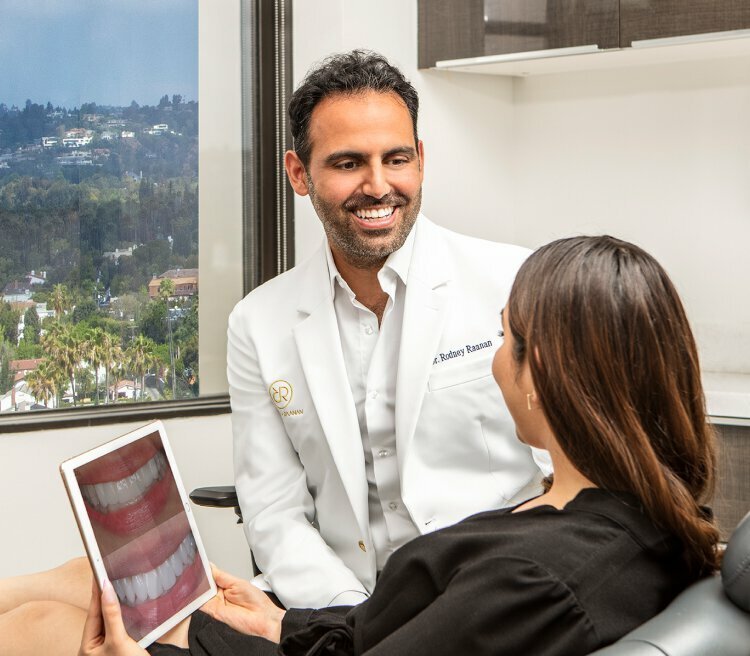
- Smile design preview: Using digital smile design software, I show you a preview of your potential results before any treatment begins.
- Honest conversation: I explain which option — NuVeneers, traditional porcelain veneers, or another approach — will give you the best outcome based on your unique anatomy and goals.
- Customized treatment plan: You receive a detailed plan including timeline, cost, and aftercare instructions.
There is no pressure and no obligation. My goal is to educate you and help you feel confident in your decision.
Frequently Asked Questions
What is the main difference between NuVeneers and porcelain veneers?
The main difference is the amount of tooth structure removed. Traditional porcelain veneers require your dentist to shave down a layer of enamel before bonding the veneer. NuVeneers are designed to be ultra-thin, so they require little to no enamel removal. Both options use high-quality porcelain and deliver beautiful, natural-looking results.
Are NuVeneers as durable as traditional porcelain veneers?
Yes. NuVeneers are made from advanced ultra-thin ceramic materials that are extremely strong despite their minimal thickness. When placed by an experienced cosmetic dentist and maintained with proper oral hygiene, NuVeneers can last just as long as traditional porcelain veneers.
Do NuVeneers require drilling or anesthesia?
In many cases, NuVeneers require no drilling and no anesthesia. Because the technique preserves your natural enamel, the process is often more comfortable than traditional veneer placement. Each case is different, so your dentist will let you know what to expect during your consultation.
Can I get NuVeneers if my teeth are crooked?
NuVeneers work best for patients with minor cosmetic concerns such as small gaps, chips, or mild unevenness. If your teeth are significantly crooked or misaligned, you may need orthodontic treatment first or traditional porcelain veneers that can address larger structural changes. A personalized consultation is the best way to determine your ideal treatment path.
How much do NuVeneers cost compared to porcelain veneers in Beverly Hills?
The cost of NuVeneers and porcelain veneers varies depending on the number of teeth treated, the complexity of the case, and the materials used. In Beverly Hills, cosmetic veneers typically range from $2,000 to $4,000 per tooth. During your consultation, you will receive a detailed cost breakdown tailored to your specific treatment plan.
Written by Dr. Rodney Raanan, DDS MMSc — Harvard-trained cosmetic dentist and prosthodontist in Beverly Hills, CA. Call us at (310) 205-5300 or schedule a consultation.