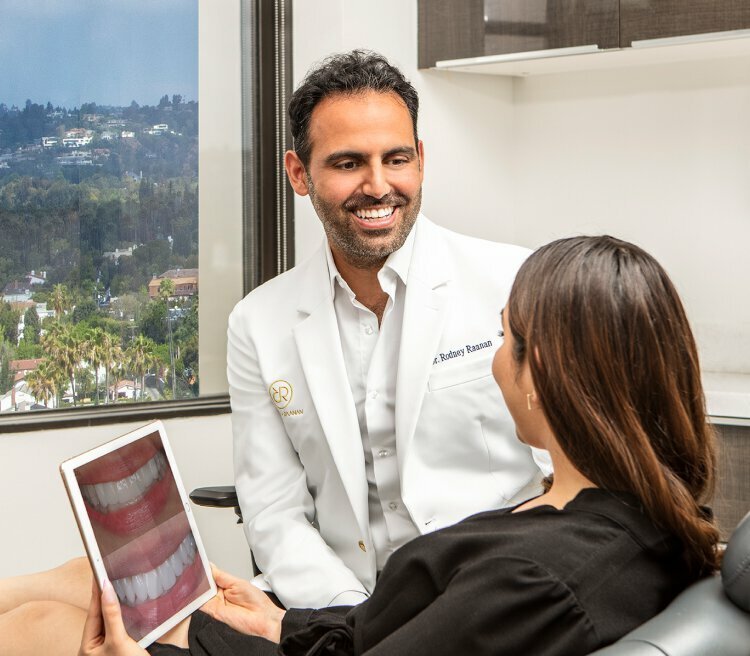
I would like to discuss a common fear that I encounter almost daily in my practice. When patients consider enhancing their smile, they often come in worried about one thing: the veneers looking fake. They worry about teeth that look too big, too white, or too uniform—the dreaded “Chiclet” look that sometimes gives cosmetic dentistry a bad name.
I understand this concern completely. The idea of getting a smile makeover should be exciting, not terrifying. I am here to tell you that this fear is based on outdated technology and a misunderstanding of what modern cosmetic dentistry truly is. Creating a beautiful smile with porcelain veneers is not a simple technical procedure; it is a blend of advanced science, meticulous precision, and high-level artistry. In fact, a truly successful smile transformation should leave people noticing your beautiful smile, not your dental work. They should see a brighter, more confident version of you.
In this deep dive, I aim to dispel this misconception and guide you through the precise steps we take to ensure your new smile is perfectly tailored, beautifully natural, and completely functional. We will explore the science of material, the role of expert design, and the incredible long-term success rates that modern veneers offer.
From Past Mistakes to Modern Masterpieces: The Veneer Evolution
The stereotype of fake-looking veneers comes from the early days of cosmetic dentistry. Back then, we worked with less sophisticated materials and cementing techniques. The ceramics were often opaque, meaning they blocked all light instead of reflecting and scattering it like natural tooth enamel does. The preparation techniques sometimes required aggressive tooth reduction, and the general approach focused more on achieving maximum brightness than organic beauty.
Today, the entire process has undergone a revolution. We now use high-strength, micro-thin ceramics and cutting-edge bonding agents. This shift means that our focus is now entirely on minimally invasive dentistry and maximum personalization. We are not just covering teeth; we are enhancing their natural beauty using materials that closely mimic the genuine structure of a tooth.
The Scientific Secret to Naturalness: Light and Translucency
The real key to a natural-looking smile lies in how the porcelain interacts with light.
Here is a scientific fact that guides all of my work: Natural tooth enamel is not uniformly opaque; it is inherently translucent, which allows light to enter the surface of the tooth and reflect off the underlying dentin layer. This unique characteristic is what gives teeth their depth, vitality, and slightly varied tone.
Modern high-quality porcelain, such as E.max or Feldspathic ceramic, is engineered to replicate this quality exactly. Studies on dental porcelain have confirmed that the material exhibits a high degree of light scattering, with a total transmittance of around 26.8 percent for a 1mm thickness (Source: PubMed). This translucency is the reason the light hits your veneer, making it look soft, life-like, and never flat or dull.
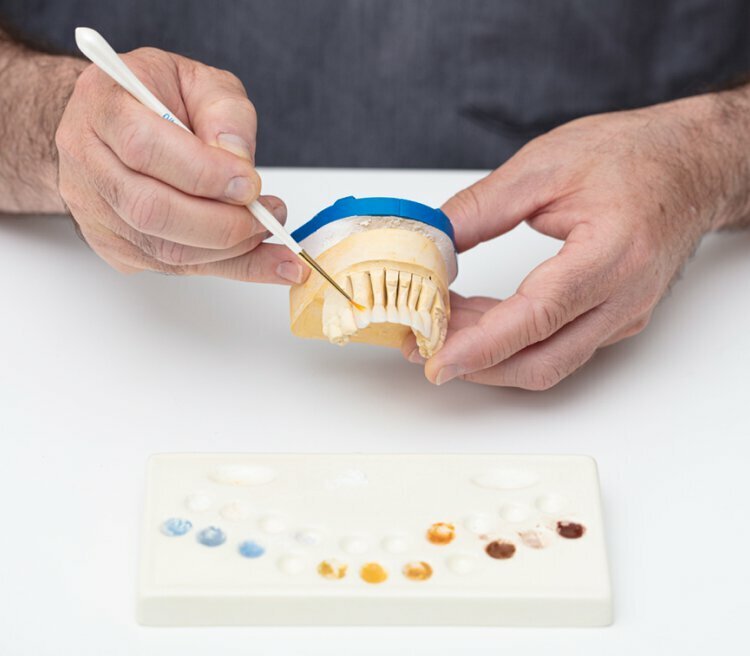
When I design a veneer, I utilize multiple layers of ceramic, each with a different level of opacity and translucency. I build depth and varying color saturation, much like a painter layers pigments. This technique ensures that the incisal edge—the biting edge of the tooth—has the delicate, slightly translucent, watery appearance that defines a youthful, natural tooth.
The Art of Natural-Looking Veneers: The Five Pillars of Customization
To ensure your veneers look authentic, we must move beyond simple measurements and embrace a detailed, artistic design process. I focus on five critical elements of customization:
1. The Right Color: Beyond Pure White
When you ask for a “white” smile, my job is to interpret that desire while keeping it natural. Natural teeth are never just one shade of white. They have warmth near the gumline and a cooler, more translucent tone at the tips. Choosing the right shade involves considering your skin tone, the color of your eyes, and your desired overall result. We use subtle shifts in color from one tooth to the next and from top to bottom, avoiding the monochromatic look that screams “fake.”
2. Micro-Texture and Surface Anatomy
If you run your tongue across a natural tooth, you will feel minute ridges, dips, and convexities. These are not flaws; they are the unique surface anatomy that makes each tooth distinct. A porcelain veneer that appears fake is often one that is polished to a perfect smoothness, which is unnatural. I work closely with master ceramists to etch, shape, and polish micro-details into the porcelain surface. We create subtle vertical lines, known as perikymata, that interact with light to break up reflections, giving the tooth a truly organic finish. This level of detail is non-negotiable for a natural result.
3. Shape and Facial Harmony
Your smile must harmonize with your face. This means the shape of your veneers cannot be determined in isolation. I assess your facial symmetry, the curvature of your lower lip, and even the way you speak and move your mouth.
- A male patient might need slightly squarer teeth with sharper angles.
- A female patient might look best with softer, rounder contours.
The goal is to design a tooth shape that resembles the one you were meant to have, thereby enhancing your existing facial features. The shape of the smile dictates its perceived personality. A slight adjustment in the angle of the canine can transform a gentle smile into a bold one.
4. Incisal Edge Position and Length
Length is one of the most crucial factors for achieving a natural appearance and function. Teeth that are too long will look like horse teeth; teeth that are too short fail to make an impact. We utilize a comprehensive digital Smile Design process, including Diagnostic Wax-Ups and Temporary Veneers (Provisionals), to test the final length and shape in your mouth before any permanent work begins.
This trial period enables you to evaluate the proposed changes in real-world scenarios—such as talking, eating, and smiling—allowing us to make precise, subtle adjustments until we achieve the optimal result. This process minimizes risk and ensures you love the outcome.
5. Gum Line Health and Symmetry
Healthy, symmetrical gums frame a beautiful smile. If the gums are uneven, even the most perfectly shaped veneers can look unnatural. Before placing the veneers, we often perform minor gum contouring to ensure the gum line is balanced and aesthetically pleasing. This process, known as crown lengthening or gingivoplasty, creates the perfect frame for your new porcelain masterpieces, which is crucial for overall facial aesthetics.
The Veneer Lifespan: Longevity and Data-Driven Success
Beyond aesthetics, you should feel confident in your investment. Modern porcelain veneers are incredibly strong and designed to last. The concern that they are fragile or temporary is another outdated notion.
We have substantial data supporting the durability of these restorations.
- Data Point: A systematic review published in the Journal of Oral Rehabilitation demonstrated the incredible reliability of this treatment, showing that porcelain laminate veneers (PLVs) have an estimated cumulative survival rate of 95.5% at 10 years. When bonded correctly to the tooth structure, the combination of high-strength porcelain and advanced dental adhesives creates a bond that is stronger than the original tooth itself.
- Patient Satisfaction: Ultimately, the success of the treatment is measured by the patient’s happiness. Across multiple studies, patient feedback confirms the value of this procedure, with approximately 90% of patients reporting significant improvements to their smiles after getting porcelain veneers (Source: Impressions Dental Statistics).
This exceptional longevity is only achieved when the entire process is handled with precision—from the initial bite analysis to the final bonding technique. When you partner with an experienced specialist, you ensure that your transformation is not only beautiful but also built to stand the test of time. For more information on the standards of care in our field, I encourage you to visit reputable organizations, such as the American Academy of Cosmetic Dentistry, or explore the latest research on dental materials (Source: Wikipedia – Dental Porcelain).
The Final Word on Naturalness
Suppose you are considering a smile makeover but are hesitant because of the old myth that porcelain veneers look fake. In that case, I hope I have given you the professional assurance you need. The “fake” veneer is a relic of the past. Today, the work we do in high-end cosmetic dentistry is focused on subtlety, customization, and natural smile transformation. We are using materials that literally mimic the light-handling properties of your natural tooth enamel.
My promise to every patient is simple: We will not stop designing until your new smile feels like the best version of your old smile—enhanced, refined, and entirely you. Your friends and family should look at you and remark on how wonderful you look, without ever being able to pinpoint exactly what changed. That is the definition of true dental artistry.
I’d like to invite you to explore the possibilities of a customized, natural-looking smile transformation and learn more about my approach to cosmetic dentistry on my website. We are dedicated to creating beautiful, enduring smiles right here in Beverly Hills.
Ready to see how we can create a natural, stunning smile for you? Visit my website and schedule your consultation today: Dr. Rodney Raanan.
The scientific advancements in dental porcelain are discussed in depth, including how light interacts with the material, in this video: Understanding Porcelain from Opacity to Translucency.# Common Misconception: Porcelain Veneers Look Fake – The Art of Natural-Looking Smile Transformations
Hello, I’m Dr. Rodney Raanan, and I’d like to discuss a common fear I hear almost every day in my practice. When patients consider enhancing their smile, they often come in worried about one thing: the veneers looking fake. They worry about teeth that look too big, too white, or too uniform—the dreaded “Chiclet” look that sometimes gives cosmetic dentistry a bad name.
I understand this concern completely. The idea of getting a smile makeover should be exciting, not terrifying. I am here to tell you that this fear is based on outdated technology and a misunderstanding of what modern cosmetic dentistry truly is. Creating a beautiful smile with porcelain veneers is not a simple technical procedure; it is a blend of advanced science, meticulous precision, and high-level artistry. In fact, a truly successful smile transformation should leave people noticing your beautiful smile, not your dental work. They should see a brighter, more confident version of you.
In this deep dive, I aim to dispel this misconception and guide you through the precise steps we take to ensure your new smile is perfectly tailored, beautifully natural, and completely functional. We will explore the science of material, the role of expert design, and the incredible long-term success rates that modern veneers offer.
From Past Mistakes to Modern Masterpieces: The Veneer Evolution
The stereotype of fake-looking veneers comes from the early days of cosmetic dentistry. Back then, we worked with less sophisticated materials and cementing techniques. The ceramics were often opaque, meaning they blocked all light instead of reflecting and scattering it like natural tooth enamel does. The preparation techniques sometimes required aggressive tooth reduction, and the general approach focused more on achieving maximum brightness than organic beauty.
Today, the entire process has undergone a revolution. We now use high-strength, micro-thin ceramics and cutting-edge bonding agents. This shift means that our focus is now entirely on minimally invasive dentistry and maximum personalization. We are not just covering teeth; we are enhancing their natural beauty using materials that closely mimic the genuine structure of a tooth.
The Scientific Secret to Naturalness: Light and Translucency
The real key to a natural-looking smile lies in how the porcelain interacts with light.
Here is a scientific fact that guides all of my work: Natural tooth enamel is not uniformly opaque; it is inherently translucent, which allows light to enter the surface of the tooth and reflect off the underlying dentin layer. This unique characteristic is what gives teeth their depth, vitality, and slightly varied tone.
Modern high-quality porcelain, such as E.max or Feldspathic ceramic, is engineered to replicate this quality exactly. Studies on dental porcelain have confirmed that the material exhibits a high degree of light scattering, with a total transmittance of around 26.8 percent for a 1mm thickness (Source: PubMed). This translucency is the reason the light hits your veneer, making it look soft, life-like, and never flat or dull.
When I design a veneer, I utilize multiple layers of ceramic, each with a different level of opacity and translucency. I build depth and varying color saturation, much like a painter layers pigments. This technique ensures that the incisal edge—the biting edge of the tooth—has the delicate, slightly translucent, watery appearance that defines a youthful, natural tooth.
The Art of Natural-Looking Veneers: The Five Pillars of Customization
To ensure your veneers look authentic, we must move beyond simple measurements and embrace a detailed, artistic design process. I focus on five critical elements of customization:
1. The Right Color: Beyond Pure White
When you ask for a “white” smile, my job is to interpret that desire while keeping it natural. Natural teeth are never just one shade of white. They have warmth near the gumline and a cooler, more translucent tone at the tips. Choosing the right shade involves considering your skin tone, the color of your eyes, and your desired overall result. We use subtle shifts in color from one tooth to the next and from top to bottom, avoiding the monochromatic look that screams “fake.”
2. Micro-Texture and Surface Anatomy
If you run your tongue across a natural tooth, you will feel minute ridges, dips, and convexities. These are not flaws; they are the surface anatomy that makes the tooth unique. A porcelain veneer that looks fake is often one that is polished perfectly smooth, which is unnatural. I work closely with master ceramists to etch, shape, and polish micro-details into the porcelain surface. We create subtle vertical lines, known as perikymata, that interact with light to break up reflections, giving the tooth a truly organic finish. This level of detail is non-negotiable for a natural result.
3. Shape and Facial Harmony
Your smile must harmonize with your face. This means the shape of your veneers cannot be determined in isolation. I assess your facial symmetry, the curvature of your lower lip, and even the way you speak and move your mouth.
- A male patient might need slightly squarer teeth with sharper angles.
- A female patient might look best with softer, rounder contours.
The goal is to design a tooth shape that resembles the one you were meant to have, thereby enhancing your existing facial features. The shape of the smile dictates its perceived personality. A slight adjustment in the angle of the canine can transform a gentle smile into a bold one.
4. Incisal Edge Position and Length
Length is one of the most crucial factors for achieving a natural appearance and function. Teeth that are too long will look like horse teeth; teeth that are too short fail to make an impact. We utilize a comprehensive digital Smile Design process, including Diagnostic Wax-Ups and Temporary Veneers (Provisionals), to test the final length and shape in your mouth before any permanent work begins.
This trial period enables you to evaluate the proposed changes in real-world scenarios—such as talking, eating, and smiling—allowing us to make precise, subtle adjustments until we achieve the optimal result. This process minimizes risk and ensures you love the outcome.
5. Gum Line Health and Symmetry
Healthy, symmetrical gums frame a beautiful smile. If the gums are uneven, even the most perfectly shaped veneers can look unnatural. Before placing the veneers, we often perform minor gum contouring to ensure the gum line is balanced and aesthetically pleasing. This process, known as crown lengthening or gingivoplasty, creates the perfect frame for your new porcelain masterpieces, which is crucial for overall facial aesthetics.
The Veneer Lifespan: Longevity and Data-Driven Success
Beyond aesthetics, you should feel confident in your investment. Modern porcelain veneers are incredibly strong and designed to last. The concern that they are fragile or temporary is another outdated notion.
We have substantial data supporting the durability of these restorations.
- Data Point: A systematic review published in the Journal of Oral Rehabilitation demonstrated the incredible reliability of this treatment, showing that porcelain laminate veneers (PLVs) have an estimated cumulative survival rate of 95.5% at 10 years. When bonded correctly to the tooth structure, the combination of high-strength porcelain and advanced dental adhesives creates a bond that is stronger than the original tooth itself.
- Patient Satisfaction: Ultimately, the success of the treatment is measured by the patient’s happiness. Across multiple studies, patient feedback confirms the value of this procedure, with approximately 90% of patients reporting significant improvements to their smiles after getting porcelain veneers (Source: Impressions Dental Statistics).
This exceptional longevity is only achieved when the entire process is handled with precision—from the initial bite analysis to the final bonding technique. When you partner with an experienced specialist, you are ensuring your transformation is not just beautiful, but built to stand the test of time. For more information on the standards of care in our field, I encourage you to visit reputable organizations like the American Academy of Cosmetic Dentistry or look into the latest research on dental materials (Source: Wikipedia – Dental Porcelain).
The Final Word on Naturalness
Suppose you are considering a smile makeover but are hesitant because of the old myth that porcelain veneers look fake. In that case, I hope I have given you the professional assurance you need. The “fake” veneer is a relic of the past. Today, the work we do in high-end cosmetic dentistry is focused on subtlety, customization, and natural smile transformation. We are using materials that literally mimic the light-handling properties of your natural tooth enamel.
My promise to every patient is simple: We will not stop designing until your new smile feels like the best version of your old smile—enhanced, refined, and entirely you. Your friends and family should look at you and remark on how wonderful you look, without ever being able to pinpoint exactly what changed. That is the definition of true dental artistry.
I invite you to explore the possibilities of a customized, natural-looking smile transformation and learn more about my approach to cosmetic dentistry on my website. We are dedicated to creating beautiful, enduring smiles right here in Beverly Hills.
Ready to discover how we can help you achieve a natural, stunning smile? Visit my website and schedule your consultation today: Dr. Rodney Raanan.
The scientific advancements in dental porcelain are discussed in depth, including how light interacts with the material, in this video: Understanding Porcelain from Opacity to Translucency.