When you scroll through Instagram or watch a red carpet event, it is almost impossible not to notice the smiles. They dazzle. They light up the room. They seem effortlessly flawless. But as someone who works behind the scenes creating these looks, I can tell you that “effortless” is actually the result of precise engineering, artistic vision, and high-level dental science. We often look at a Hollywood star and think they were just born lucky, but more often than not, that perfect grin is the work of a skilled Celebrity Dentist.
I want to take you behind the curtain today. We are going to deconstruct exactly what makes those smiles look so perfect. It isn’t just about making teeth white. If it were that simple, everyone with a whitening kit would look like a movie star. The reality is much more complex and fascinating. It involves mathematics, facial geometry, and an understanding of light. Let’s break down the secret formula to the Hollywood smile.
The Golden Proportion: The Math Behind the Magic
You might remember learning about the “Golden Ratio” or “Phi” (1.618) in math class. It appears in nature everywhere, from the spiral of a seashell to the petals of a flower. Believe it or not, this same mathematical principle is the foundation of a stunning smile. When I design a smile makeover, I am not just guessing at tooth sizes. I am looking for that perfect mathematical harmony.
In a perfect smile, the width of the central incisor (the front tooth) is in a specific proportion to the lateral incisor (the tooth next to it), and so on. When you look at a celebrity and think, “Wow, they look balanced,” your brain is actually recognizing this mathematical symmetry. If the front teeth are too wide, they look like “rabbit teeth.” If they are too narrow, the smile lacks dominance. Achieving this balance is step one in the deconstruction process.
The Importance of the “Smiler’s Curve”
Have you ever seen a smile that just looked… flat? It usually happens when teeth have been worn down over time or if dental work was done poorly. A youthful, attractive smile follows the curve of the lower lip. This is what we call the “Smile Arc.”
When I evaluate a patient, I ask them to smile naturally. I want to see the edges of their upper teeth gently follow the contour of their lower lip. In almost every iconic celebrity smile, you will see this curve. It creates a harmonious flow that signals youth and vitality. If the teeth are arranged in a straight, flat line, it can make a face look older and sterner. By re-establishing this curve, usually through porcelain veneers or bonding, we can instantly take years off a patient’s appearance.
It’s Not Just About White; It’s About Translucency
One of the biggest misconceptions people have is that “white equals perfect.” This is actually false. If you look closely at a sheet of white printer paper, it is flat and opaque. If you put that color in a human mouth, it looks fake. It looks like what we in the industry call “chiclets.”
A true Celebrity Dentist understands that natural teeth interact with light in a very specific way. The enamel (the outer layer) is like glass; it is translucent. The dentin (the inner layer) provides the color. When light hits a beautiful tooth, it passes through the edge and bounces off the inner layers. This gives the tooth depth and life.
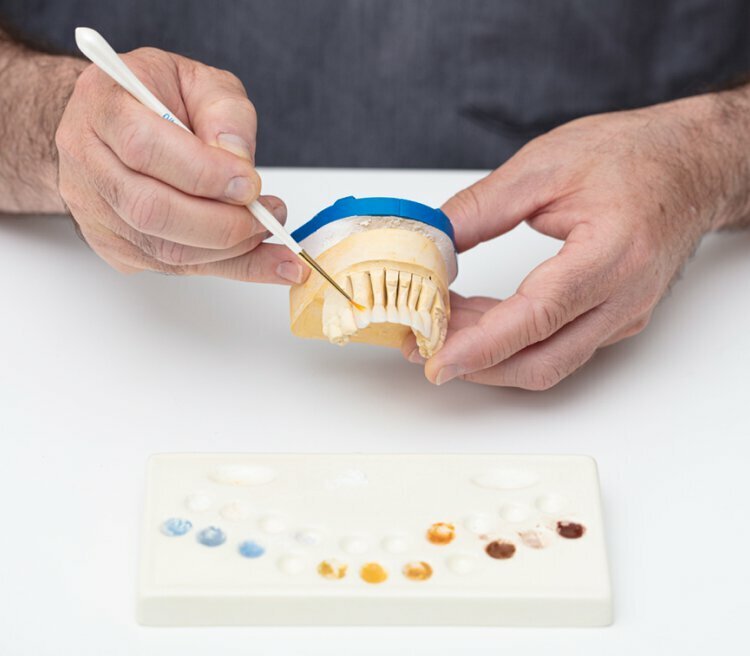
To recreate this in a smile makeover, I use high-grade ceramics that mimic this light-handling property. We layer different shades of porcelain to create a gradient. Real teeth are slightly darker near the gum line and more transparent at the biting edge. When we deconstruct a bad veneer job versus a world-class one, the difference is almost always in this texture and translucency. We want the smile to shine, not look like plastic.
The Buccal Corridor: The Dark Space Matters
This is a technical term, but it is easy to understand. The “buccal corridor” refers to the dark space between the corners of your lips and your upper back teeth when you smile. Go look in the mirror and smile wide. Do you see black triangles in the corners? Or is your smile full and wide?
A narrow dental arch creates large dark corridors, which can make the mouth look small and the teeth look crowded. Most Hollywood stars have a broad, full arch. When they smile, their teeth fill the frame almost to the corners of the lips. This provides better support for the cheeks and lips, which creates a more youthful facial structure. Expanding this corridor is a subtle change that makes a massive difference in the overall impact of the smile.
Micro-Esthetics and Texture
While macro-esthetics covers the shape and alignment, micro-esthetics covers the tiny details. If a tooth is perfectly smooth, it reflects light like a mirror. Natural teeth, however, have texture. They have tiny grooves and lobes. When I finish a case, I ensure there is surface texture that breaks up the light reflection. This makes the restoration look hyper-realistic. It is these microscopic details that prevent people from asking “Who did your teeth?” and instead makes them say, “You have a beautiful smile.”
The Role of Gum Architecture
You can have the most beautiful teeth in the world, but if the “frame” is uneven, the picture won’t look right. The gums are the frame. Symmetry in the gum line is crucial. Ideally, the gum line of the two central front teeth should be at the same height, and the gum line of the canines (eye teeth) should match them.
Sometimes, we see a “gummy smile,” where too much pink tissue is visible. Other times, the gum line is uneven. We use laser contouring to gently reshape the gum tissue to create perfect symmetry. It is a quick procedure with minimal healing time, but the visual impact is profound. It elongates the teeth and creates that clean, crisp look you see in magazines.
Data That Proves the Value of a Smile
We aren’t just talking about vanity here; we are talking about psychology. The impact of a smile on social interaction is backed by hard data. According to a survey by the American Academy of Cosmetic Dentistry (AACD), roughly 99.7% of adults believe a smile is an important social asset. This statistic reinforces why so many public figures invest heavily in their teeth—it is their primary tool for connection.
Furthermore, the demand for this level of perfection is skyrocketing. The global cosmetic dentistry market is expected to reach substantial heights, projected to grow significantly by 2030. This growth isn’t just driven by celebrities; it is driven by everyday professionals who realize that a confident smile can change their career trajectory and personal life.
Masculine vs. Feminine Smile Characteristics
Did you know that teeth have gender characteristics? When I design a smile, I have to consider the patient’s facial features and the look they want to project. Generally speaking, we associate certain shapes with masculinity or femininity.
- Feminine Smiles: These usually feature more rounded edges on the teeth. The “embrasures” (the small triangular spaces between the tips of the teeth) are often more open. This creates a softer, more youthful appearance.
- Masculine Smiles: These tend to have squarer teeth with flatter edges. The canines might be more aggressive or pointed. This projects strength and dominance.
However, modern cosmetic dentistry is about customization. Some women prefer a stronger, sportier look with flatter edges, while some men want a softer look. The key is that the shape of the teeth must harmonize with the shape of the face. A square face usually looks best with softer tooth angles to provide balance, whereas a round face can benefit from more defined, square teeth to add structure.
The Emotional Connection
As a Celebrity Dentist, I see the emotional shift that happens when a smile is corrected. It is not just about the physical porcelain. It is about removing a barrier. Many of my patients have spent years hiding their teeth, laughing behind their hands, or smiling with their mouths closed. When we correct the color, alignment, and shape, the physical tension in their face disappears.
When you see a celebrity beaming on the red carpet, you are seeing confidence. That confidence comes from knowing that when they open their mouth, everything looks harmonious. That is the feeling I strive to give every single patient, regardless of whether they are famous or not.
Maintenance: The Unsung Hero
We have deconstructed the look, but we must also talk about longevity. A perfect smile requires maintenance. Celebrities do not just get veneers and forget about them. They are diligent about hygiene. They wear night guards to protect their investment from grinding (bruxism) during sleep. They avoid staining foods or visit us for regular professional cleaning and polishing.
Porcelain is stain-resistant, but it is not stain-proof. The glaze can dull over time if not cared for. Keeping that “wet” look requires excellent oral health. Healthy gums are pink and firm; unhealthy gums are red and puffy. No amount of beautiful porcelain can hide unhealthy gums. Therefore, part of the “perfect look” is actually just a rigorous commitment to health.
How Technology Changed the Game
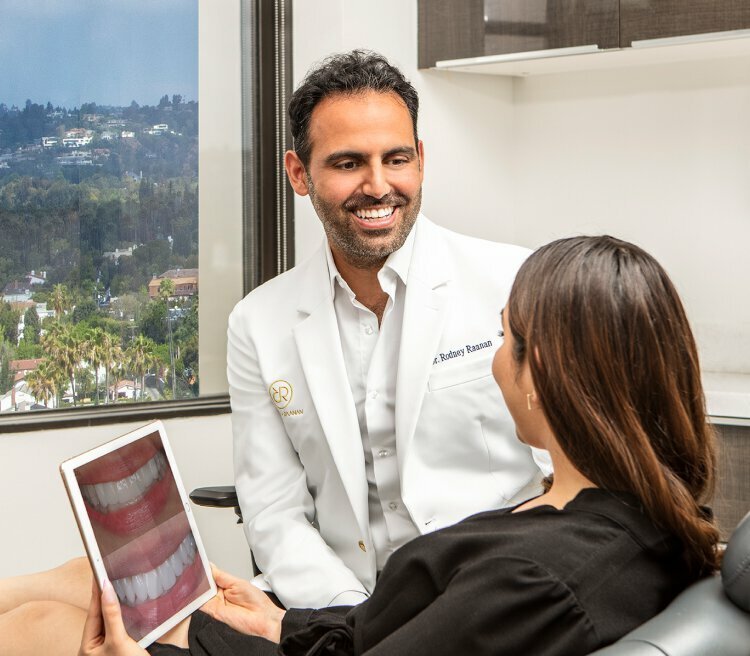
In the past, getting a smile makeover was a bit of a guessing game. You would hope the dentist understood your vision. Today, we use Digital Smile Design (DSD). This allows us to take photos and videos of the patient and digitally overlay the new smile before we even touch a tooth.
We can look at how the smile moves when you talk, laugh, and rest. We can adjust the length of the teeth by millimeters on a screen to ensure it fits your face perfectly. This digital deconstruction ensures that the final result is predictable and personalized. It is why modern celebrity smiles look so much more natural than the “Hollywood White” smiles of the 1990s.
For more insights on the standards of cosmetic dentistry and the importance of choosing the right professional, you can visit the American Academy of Cosmetic Dentistry (AACD). They set the gold standard for what we do.
Your Turn to Shine
Deconstructing celebrity smiles reveals that perfection is rarely accidental. It is a blend of art, science, and psychology. It involves manipulating light, respecting mathematical proportions, and maintaining strict biological health. But the most important takeaway is that these techniques are not reserved for the A-list.
You have the ability to access the same level of care and artistry. Whether it is correcting a single discolored tooth, widening your buccal corridor, or undergoing a full smile makeover, the principles remain the same. We look at your face, your personality, and your goals to engineer a smile that looks like you were born with it—only better.
I hope this look behind the scenes has given you a new appreciation for the details that go into a world-class smile. If you are ready to explore what your perfect smile might look like, I am here to help guide you through that transformation.