Imagine walking onto a car lot, pointing at a beautiful luxury vehicle, and handing over your credit card without ever sitting in the driver’s seat. You wouldn’t dream of buying a car without taking it for a spin, right? You want to know how it handles, how the seat feels, and if you can see clearly out of the mirrors. It is a significant investment, and you need to be sure it is the right fit for you.
For years, cosmetic dentistry worked a bit differently. Patients would often have to trust a dentist’s vision, hope for the best, and wait until the final veneers or crowns were cemented to see the real result. While we always aimed for perfection, the patient was often left out of the visual planning process until the very end. That creates a lot of anxiety. After all, your smile is something you wear every single day.
I am here to tell you that those days of guessing are over. In my practice, I utilize a revolutionary protocol known as Digital Smile Design (DSD). This technology allows us to bridge the gap between what you want and what we can medically achieve. Essentially, it allows you to test drive your new smile before you commit to the treatment. It is a game-changer for me as a dentist, and even more importantly, for you as the patient.
The Problem with “Blind” Dentistry
In the past, communicating what you wanted in a smile makeover was difficult. You might say “I want them white and straight,” but your definition of “white” and “straight” might be totally different from mine. I could show you photos of other patients, but those teeth belong in their mouths, not yours. Their face shape, lip movement, and gum lines are different.
This ambiguity is the biggest hurdle in cosmetic dentistry. It creates a fear of the unknown. I have met many patients who waited years to fix their teeth simply because they were terrified of ending up with a smile that looked fake, too big, or just didn’t look like “them.”
Digital Smile Design solves this communication problem completely. It puts you in the architect’s chair alongside me. We don’t just look at teeth; we look at the whole picture.
What Exactly Is Digital Smile Design?
Digital Smile Design is a conceptual dental treatment planning tool that is used to strengthen the diagnostic vision, improve communication, and enhance predictability throughout the treatment. But let’s break that down into simple terms.
Think of it as the blueprint for a house. Before a builder lays a single brick, an architect draws detailed plans. They look at the landscape, the lighting, and the functionality. DSD is the architectural blueprint for your mouth. It relies on advanced imaging software and videography to analyze the relationship between your teeth, gums, lips, and your face in motion.
When we smile, we don’t freeze like a photograph. We talk, we laugh, and we express emotion. Traditional planning often looked at static photos. Digital Smile Design looks at you in motion. I analyze how your lip rises when you laugh and how your teeth show when you speak. This ensures that the final result isn’t just beautiful on a model, but harmonious with your unique facial features.
The Step-by-Step Test Drive Experience
You might be wondering what a DSD appointment actually looks like. It is actually a very fun and interactive process. Here is how we typically approach it in my office.
Step 1: The Studio Session
First, we stop being dentists and start being photographers. We take high-quality digital photographs and videos of you. We capture you from every angle. I will ask you to talk, smile naturally, smile widely, and rest your face. This data gives us the library of movement we need to design a smile that fits your personality.
Step 2: The Digital Analysis
Once you leave the chair, the digital magic happens. I upload your images into the Digital Smile Design software. This is where I draw reference lines and shapes over your face to determine the perfect symmetry.
I look at the horizontal line of your eyes, the center of your face, and the curve of your lower lip. Did you know that a youthful, attractive smile usually follows the curve of the lower lip? We use these aesthetic principles to digitally draw new shapes for your teeth right over your photo. We can adjust the length, width, and angles to see what looks best.
Step 3: The Mock-Up (The Test Drive)
This is the “wow” moment. Based on the digital design, we create a physical 3D model. From this model, we create a temporary resin version of your new smile.
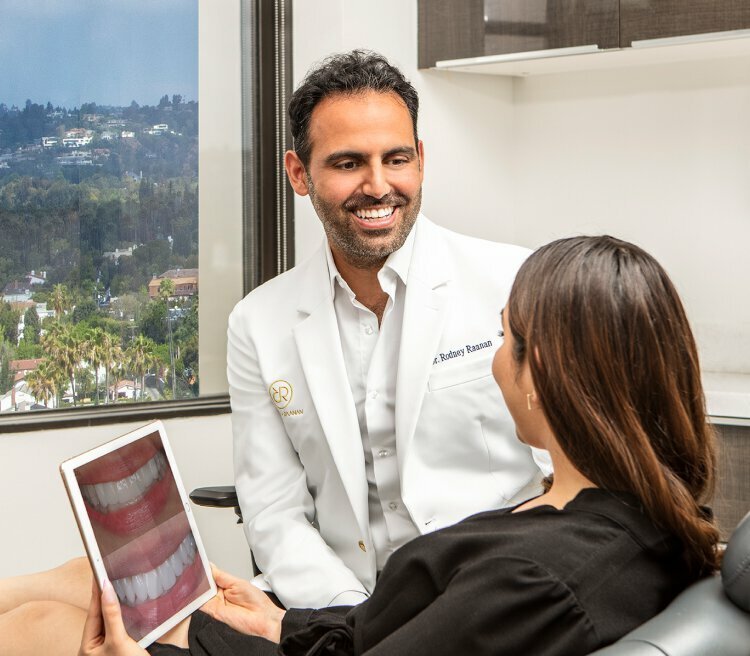
You come back into the office, and without any drilling, numbing, or pain, I place this mock-up over your existing teeth. You can stand up, walk to the mirror, and see your future smile right there on your own face. You can talk, take selfies, and video chat with your partner. You get to see exactly how the final result will look.
According to recent industry insights, visual aids in dentistry, specifically digital simulations and mock-ups, can increase patient acceptance of treatment plans by up to 90%. This proves that when people can see the future, they feel confident enough to move forward.
Why Facial Harmony Matters More Than Perfect Teeth
One of the reasons I am so passionate about Digital Smile Design is that it moves us away from “cookie-cutter” smiles. You have probably seen people with veneers that look like Chiclets—square, opaque, and obviously fake. That usually happens when the dentist focuses only on the teeth and ignores the face.
My goal is facial harmony. Your teeth need to support your lips. They need to be the right size for your face shape. For example, if you have a round face, we might design teeth that are slightly more rectangular to provide a slimming effect. If you have a very angular face, we might soften the edges of the teeth to make your look gentler.
With DSD, we are not just fixing teeth; we are enhancing your overall facial aesthetics. We are looking at the “negative space” (the dark corners of the mouth when you smile) and the “gum display.” It is a holistic approach to beauty.
The Emotional Connection to Your Smile
We cannot ignore the psychological aspect of this process. A smile is your primary tool for social engagement. When you are insecure about your teeth, you subconsciously modify your behavior. You might cover your mouth when you laugh, or you might offer a “closed-lip” smile in photos.
When I place the mock-up in a patient’s mouth for the test drive, the reaction is almost always emotional. I have seen patients cry tears of joy just seeing what is possible. It unlocks a version of themselves they haven’t seen in years—or perhaps ever.
This emotional validation is crucial. It confirms that we are on the right track. If you look in the mirror and don’t feel an immediate boost in confidence, we go back to the drawing board. We tweak the design until it feels right emotionally, not just clinically.
Improving Clinical Precision
While the visual aspect is great for you, Digital Smile Design is also a critical clinical tool for me and my laboratory team. In the old days, I would write a prescription to the ceramist that said, “Make veneers for teeth 6 through 11, shade B1.” That leaves a lot of room for interpretation.
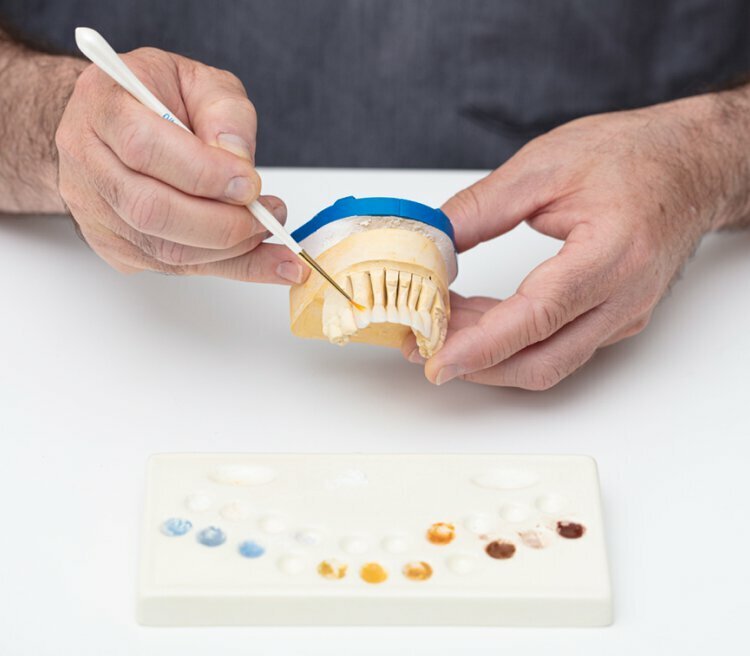
With DSD, I am sending the ceramist the exact digital files of the approved design. They can see the video of your face. They can see exactly where the midline needs to be and how long the central incisors should be down to the millimeter. This means the final porcelain veneers or crowns will match the mock-up you fell in love with.
Data regarding restorative dentistry indicates that digital workflows significantly reduce the need for “remakes” or adjustments. While traditional methods might have a higher error margin requiring retries, digital planning ensures that the final prosthetic fits the patient’s biological and aesthetic parameters accurately the first time.
Is Digital Smile Design Right for You?
You might be thinking, “This sounds great, Dr. Raanan, but is it for me?” The answer is likely yes. DSD is versatile. It is not just for full mouth reconstructions. It is an excellent tool for:
- Veneers: Planning the shape and size for a natural look.
- Dental Implants: Ensuring the new tooth integrates perfectly with the gum line.
- Gum Contouring: Planning laser lift procedures to reduce a “gummy smile.”
- Orthodontics: Visualizing how straight teeth will change your facial profile.
- Wear and Tear: Restoring length to teeth that have been ground down over the years.
If you have ever looked in the mirror and wished you could change something about your smile, this protocol is the safest first step. It requires no commitment to surgery or drilling to simply go through the design phase.
A Collaborative Journey
I believe that the best healthcare outcomes happen when the doctor and the patient work as a team. I am the expert on biology, function, and ceramics, but you are the expert on you. You know what makes you feel beautiful and confident.
Digital Smile Design creates a platform for honest feedback. When you try on your new smile, you can say, “I think the front two teeth are a little too long,” or “I want a brighter shade of white.” Because it is digital and temporary, making those changes is easy. It empowers you to take ownership of your treatment.
This transparency builds trust. You aren’t just a passive recipient of dental work; you are a co-designer. This collaboration ensures that when the final day comes and we bond the permanent restorations, there are no surprises—only celebrations.
Technology Meets Artistry
It is important to remember that technology is only as good as the person using it. DSD is a tool, but it requires an artistic eye to interpret the data. At my practice, we combine high-tech precision with the nuances of hand-crafted artistry. We look at texture, translucency, and how light reflects off the surface of the teeth.
Natural teeth are not perfectly flat white blocks. They have subtle gradations of color and surface texture. We use DSD to plan the shape, but we use our artistic background to ensure the “soul” of the smile looks genuine. If you are interested in reading more about how technology is shaping the future of cosmetic dentistry, The British Dental Journal often publishes fascinating insights into these advancements.
Taking the Next Step
We live in a wonderful time for dentistry. The fear of the unknown effectively has been eliminated. You no longer have to cross your fingers and hope for the best. With Digital Smile Design, you can see the destination before we even start the engine.
If you have been hesitating to improve your smile because you are worried about the results, I invite you to come in for a consultation. Let’s take some photos, have a conversation, and let you test drive the smile you have always wanted. It is an exciting process, and I would be honored to guide you through it.
Your smile is your most powerful asset. It is how you greet the world. You deserve to know exactly what it will look like, and you deserve to love it.