Have you ever looked in the mirror, flossed your teeth, and noticed that no matter how clean they are, there are still small, dark spaces between them near the gum line? You are not alone. These spaces are clinically known as open gingival embrasures, but most of my patients simply call them “black triangles.” primarily because that is exactly what they look like—dark, triangular gaps between the teeth against the pink background of your gums.
As a cosmetic dentist, I see this concern almost daily. It is one of the most common aesthetic complaints I treat. While many people think these gaps are just a cosmetic annoyance, they can actually affect the long-term health of your gums. The good news is that we are living in a golden age of dentistry. We no longer have to rely on unpredictable gum surgeries or aggressive drilling to fix this. Today, I want to walk you through exactly how I help my patients eliminate black triangles teeth using two of the most effective methods available: the Bioclear method and porcelain veneers.
Understanding the Gap: What Causes Black Triangles?
Before we talk about the solution, it is helpful to understand the problem. Why do these spaces appear? You might have had perfectly snug teeth in your youth, but as the years go by, you notice these gaps forming. It can be frustrating, especially when you take good care of your oral health.
The “black triangle” is essentially a gap that appears when the gum tissue (specifically the interdental papilla) does not completely fill the space between two teeth. Because the mouth is dark inside, any space that goes all the way through shows up as black.
Here are the most common reasons I see these developing:
- Gum Recession: As we age, our gums can naturally recede. If you have had gum disease in the past, even after it is treated and healthy, the tissue often shrinks back, leaving a void.
- Bone Loss: The gum tissue relies on the underlying bone for support. If the bone level drops due to periodontal issues, the gum follows it down.
- Tooth Shape: This is a big one. Some people have teeth that are rectangular, meaning the edges touch from top to bottom. Others have teeth that are triangular—wider at the biting edge and narrower at the gum. Triangular teeth are naturally prone to forming these gaps.
- Post-Orthodontics: This is very common. You get braces or Invisalign to straighten crowded teeth. When teeth are overlapped, the gum is squeezed. Once we align them perfectly, the gum tissue settles, and suddenly that space becomes visible.
It is important to realize how common this is. According to a study published in the British Dental Journal, approximately 67% of people over the age of 20 have at least one black triangle between their teeth. It is not a rare anomaly; it is a standard part of adult dental development, but that doesn’t mean you have to live with it.
More Than Just a Cosmetic Issue
While most of my patients come to me because they dislike the look of black triangles teeth, I always remind them of the functional aspect. These gaps are notorious “food traps.”
When you eat, food particles easily get lodged in these embrasures. If you have ever felt like you immediately need a toothpick after a meal, you know the feeling. When food sits in these gaps, it encourages plaque buildup and bacteria growth. This creates a vicious cycle: the bacteria cause more gum inflammation, which can lead to more recession, making the triangle even bigger.
By closing these gaps, we aren’t just giving you a more youthful, confident smile; we are actually making your mouth easier to clean and healthier in the long run.
Solution 1: The Bioclear Method
For a long time, dentists struggled to fix black triangles. Traditional bonding (slapping some tooth-colored paste on the side of the tooth) was often messy, uncomfortable for the gums, and prone to chipping or staining. Crowns were too aggressive because we had to grind down a healthy tooth just to close a small gap.
Enter Bioclear. This is a technique I am incredibly passionate about because it is minimally invasive and produces stunning results.
What is Bioclear?
Bioclear is a modern technique that involves “injection molding” warm composite resin around the tooth. Unlike traditional bonding, where a dentist layers paste on a flat surface, Bioclear uses clear, thin forms (matrices) that wrap around your tooth. These forms sit below the gum line, allowing me to create a shape that looks like it grew there naturally.
How I Perform the Bioclear Procedure
The process is fascinating and typically requires no numbing and no drilling of the natural tooth structure.
- Biofilm Removal: First, I use a tiny “blaster” with a cleaning powder to remove the microscopic sticky layer (biofilm) from your teeth. This ensures the bond is incredibly strong.
- The Matrices: I slide thin, clear forms between your teeth. These forms are curved, not flat. This is the secret to closing the black triangle. We are changing the shape of your tooth from a triangle to a more rectangular form near the gum.
- Injection Molding: I inject warm, liquefied composite resin into the forms. Because it is warm, it flows perfectly into every nook and cranny, leaving no gaps or weak spots.
- Curing and Polishing: Once the material hardens with a special light, I shape and polish the tooth until it feels like smooth glass.
The Benefits of Bioclear for Black Triangles
I often recommend this path because it preserves your natural enamel. We are adding to the tooth, not taking away from it. The material is strong, stain-resistant, and the gums love it. Because the shape is smooth and seamless, your gum tissue often creeps back up slightly to hug the new contour, making the result look even better over time.
For more insights on how gum health relates to restorative procedures, you can read this article from the American Academy of Periodontology, which discusses the importance of periodontal stability.
Solution 2: Porcelain Veneers
While Bioclear is fantastic for targeted fixes, sometimes a patient wants a total transformation. If you have black triangles teeth combined with other issues—like discoloration that won’t whiten, chipped edges, or you want to change the overall size of your teeth—porcelain veneers are the gold standard.
The Veneer Approach
Veneers are thin shells of medical-grade ceramic that are attached to the front surfaces of your teeth. To fix black triangles with veneers, I design the ceramic to be slightly wider than your natural tooth in the gum area. This effectively bridges the gap.
The Process
Getting veneers is a more involved process than Bioclear, usually taking two or three visits.
- Planning: We start with a digital smile design. I map out exactly how we want the final smile to look, ensuring the gaps are closed while keeping the teeth looking proportionate.
- Preparation: I may need to remove a tiny amount of enamel from the front and sides of your teeth to make room for the porcelain. This ensures your teeth don’t look bulky.
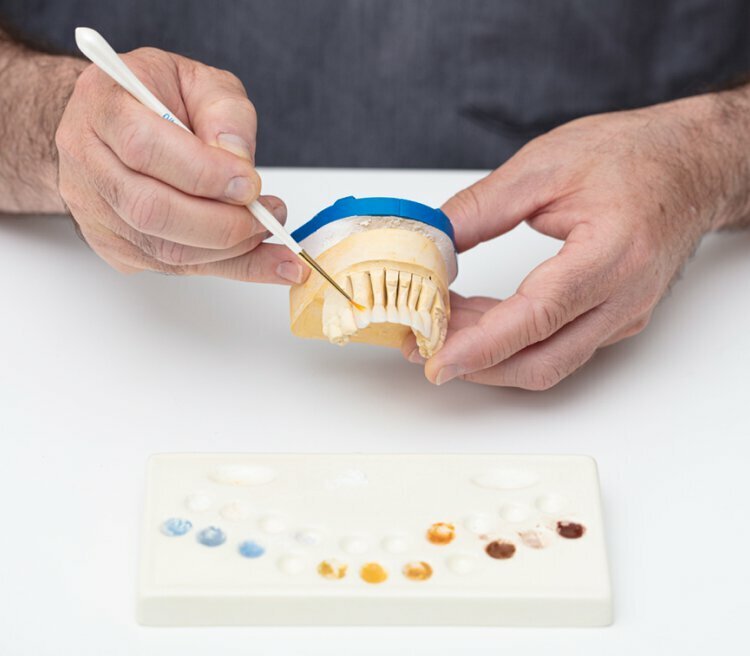
- Impressions and Temporaries: I take a mold of your teeth and send it to my master ceramist. In the meantime, you wear temporary veneers that give you a preview of your new smile.
- Bonding: When the custom porcelain veneers arrive, I bond them permanently to your teeth. The ceramic is incredibly strong and mimics the light-reflecting properties of natural teeth perfectly.
Why Choose Veneers?
Veneers offer the ultimate control over aesthetics. Porcelain is impervious to staining, so your smile stays bright permanently. Data indicates that with proper care, porcelain veneers have a survival rate of over 90% after 10 years, making them a long-term investment in your confidence. If you are looking to fix multiple aesthetic issues at once, this is likely your best route.
Bioclear vs. Veneers: Which is Right for You?
When patients sit in my chair asking about eliminating black triangles teeth, we look at a few factors to decide between these two champions.
Choose Bioclear If:
- Your teeth are generally healthy and you like their color.
- You want a lower cost option (Bioclear is typically less expensive than porcelain veneers).
- You want to avoid removing any natural tooth structure.
- You want the procedure done in a single visit.
- The gaps are your primary concern.
Choose Veneers If:
- You want to change the shade of your teeth permanently (get that “Hollywood White”).
- You have worn down edges or significant chipping.
- You want to change the length or rotation of the teeth significantly.
- You are looking for the highest level of stain resistance and durability.
The NLP of Your Smile: How You Feel Matters
In the world of dentistry, we talk a lot about “occlusion” and “margins,” but I like to focus on how a procedure makes you feel. This is where the concept of a “Duchenne smile” comes in—a smile that reaches your eyes and is genuinely authentic. When you are self-conscious about black triangles, you subconsciously hold back. You might smile with your lips closed or cover your mouth when you laugh.
By eliminating these dark spaces, we are removing a psychological barrier. Whether we use the additive magic of Bioclear or the comprehensive beauty of veneers, the goal is the same: to give you a smile that you don’t have to think about. You just smile.
Maintenance: Keeping Your New Smile Gap-Free
Once we have closed the black triangles, maintenance is key. I tell all my patients that while these materials are strong, they are not invincible.
For Bioclear, you treat it like natural enamel. You can brush and floss normally. In fact, flossing becomes easier because the contact point between the teeth is smooth and tight, giving you that satisfying “snap” when the floss goes through. However, you should use non-abrasive toothpaste to keep the polish looking high-gloss.
For veneers, the rule is to avoid using your teeth as tools. Do not tear open packages or bite your nails. Regular checkups are essential so I can ensure the gum tissue remains healthy around the porcelain.
Interestingly, many patients find that their gum health improves after treatment. Because we have closed the food traps, there is less irritation. The pink triangles of gum tissue (papilla) are no longer being battered by food debris, allowing them to remain pink and firm.
Your Smile, Reimagined
Seeing “black triangles teeth” in your reflection does not mean your smile is fading or that you are destined to have gaps forever. It is simply a sign that your dental geometry has shifted, and fortunately, we have the technology to shift it back.
Whether we choose the conservative, single-visit approach of Bioclear or the transformative power of porcelain veneers, the result is a fuller, younger-looking, and healthier smile. I have seen the immediate boost in confidence this treatment gives my patients. They walk out of the office not just looking different, but acting different—more open, more joyful, and ready to share their smile with the world.
If you are tired of seeing those dark gaps and are ready to explore your options, I am here to help guide you toward the best solution for your unique anatomy and goals.