When patients walk into my practice, they usually have one clear goal in mind: they want a better smile. But what does “better” actually mean? For some, it is that blindingly bright, perfectly symmetrical look we see on magazine covers. For others, it is a subtle enhancement that looks like they were simply born with great genetics. As a cosmetic dentist, I spend a lot of time discussing the difference between a high-wattage Hollywood Smile and a naturally perfect aesthetic.
Designing a smile is not just about fixing teeth; it is about art. It is about balancing the proportions of your face, matching your personality, and ensuring that the final result makes you feel confident. Whether you want to light up a room or just want to smile without holding back, understanding the nuances of smile design is the first step. Let’s dive into how I help you choose the path that is right for you.
Defining the “Hollywood Smile”
We have all seen it. The celebrity on the red carpet flashes a smile that seems to sparkle. This is what we often refer to as the quintessential Hollywood Smile. In the world of cosmetic dentistry, this look is characterized by a few specific traits. Usually, it involves teeth that are perfectly straight, incredibly symmetrical, and a shade of white that is brighter than natural tooth enamel.
This style is often achieved using high-grade porcelain veneers. The goal here is perfection. We eliminate any irregularities, gaps, or staining. If you are someone who is frequently on camera, creates content for social media, or simply loves the aesthetic of a flawless, monochromatic white smile, this might be the route for you. It conveys high energy, youth, and vitality.
However, achieving this look requires careful planning. If we go too white or too opaque without considering your facial features, the teeth can look artificial. My job is to ensure that even if you want that “bleached” look, it still fits within the frame of your lips so that it looks expensive and intentional, rather than fake.
The Art of the “Naturally Perfect” Look
On the other side of the spectrum, we have the “naturally perfect” approach. This is currently a massive trend in cosmetic dentistry. Many of my patients tell me, “I want veneers, but I don’t want anyone to know I have veneers.”
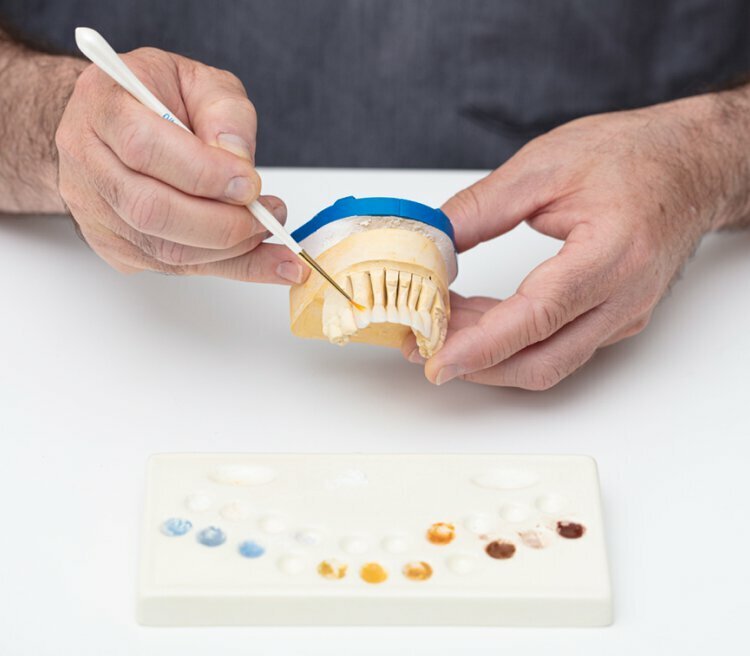
To achieve this, I use porcelain that has more translucency. Natural teeth are not solid white blocks; they have layers. The edges are often slightly sheer, and the color graduates from the gumline to the tip. When designing a naturally perfect smile, I might intentionally include very subtle imperfections or textural details that mimic real enamel.
We also play with the shape. Instead of a perfectly straight line across the bottom of the teeth, we might follow the natural curve of the lower lip more closely and round the edges of the teeth to soften the overall appearance. This look is sophisticated and timeless. It tells the world that you take care of yourself, but it whispers rather than shouts.
The Science of Color: It’s Not Just About White
Choosing the shade of your new smile is one of the most exciting parts of the process. In dentistry, we use shade guides to determine color. For a Hollywood Smile, we often look at “bleach shades” (like BL1 or BL2), which are lighter than any natural tooth can get, even with professional whitening treatments.
For a natural look, we stick to the natural spectrum. A great tip I always share with my patients is to look at the whites of your eyes. Generally, your teeth should not be significantly whiter than the sclera (the white part) of your eyes. If your teeth are blindingly white but the whites of your eyes are a softer off-white, the teeth will stand out aggressively and can actually make you look tired by contrast.
Skin tone plays a massive role here as well. If you have very fair skin, super-white teeth might wash you out. If you have a darker complexion, you can pull off a brighter white because the contrast creates a stunning effect. During our consultation, I hold up different shade tabs against your face so we can see exactly how the light hits them and how they complement your skin’s undertones.
Understanding Translucency and Texture
The way light interacts with your teeth defines how real they look. Real teeth absorb and reflect light in complex ways. If you choose a Hollywood Smile, we might use a porcelain that is slightly more opaque to ensure that bright white color pops in every lighting condition, from dim restaurants to flash photography.
For the natural route, I focus on texture. If you run your tongue over your natural teeth, they aren’t perfectly smooth glass; they have tiny ridges. We can replicate this surface texture in porcelain. This allows light to dance off the tooth surface, creating a lifelike depth. It is these microscopic details that separate a good smile makeover from a great one.
Designing for Your Face Shape
Teeth do not exist in a vacuum. They are the foundation of the lower third of your face. The shape of your veneers or crowns can actually influence the appearance of your face shape. This is where the true artistry of a cosmetic dentist comes into play.
- Oval Faces: If you have an oval face, you can pull off almost any tooth shape, but slightly square teeth with rounded corners often look best.
- Round Faces: I often suggest slightly longer, more rectangular teeth. This helps to lengthen the face and has a slimming effect.
- Square Faces: To soften a strong jawline, rounded teeth are excellent. They add a gentle aesthetic that balances the angularity of the jaw.
- Heart-Shaped Faces: Rounded teeth usually work well here too, helping to visually widen the chin area.
This is why I don’t believe in “stamping” the same set of teeth on every patient. Your unique anatomy dictates the design. We also look at the “buccal corridor”—the dark space between your teeth and the corners of your mouth when you smile. A wide, full Hollywood Smile often fills these corridors to create a broad, captivating appearance.
The Psychology of a Smile
Why does this matter so much? It is because your smile is your primary tool for social engagement. It is how you greet the world. When you are unhappy with your teeth, you subconsciously hide them. You might cover your mouth when you laugh or smile with your lips closed. This affects how people perceive you and, more importantly, how you feel about yourself.
According to a survey by the American Academy of Cosmetic Dentistry, 99.7% of adults believe an attractive smile is an important social asset. This data point highlights just how crucial this investment is. It is not vanity; it is about communication. Whether you choose the dazzling white look or the subtle natural look, the goal is to free you from insecurity so you can engage fully with the people around you.
You can read more about the impact of cosmetic dentistry and the various procedures available at the American Academy of Cosmetic Dentistry, which provides excellent resources for patients exploring these options.
The Process: How We Decide Together
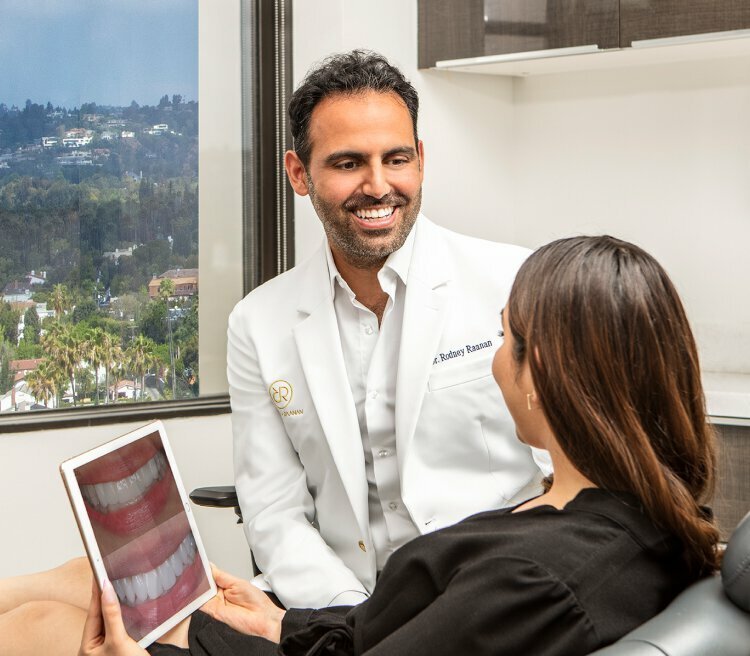
I know this can sound overwhelming. How do you choose between two great options? You don’t have to do it alone. In my office, we use Digital Smile Design technology. This allows me to take photos and videos of you and digitally overlay different smile styles.
We can simulate what a Hollywood Smile would look like on your face, and then switch to a softer, more natural design. Seeing is believing. Often, a patient comes in convinced they want the whitest teeth possible, but when they see the digital simulation, they realize a softer white looks more elegant. Conversely, some patients think they want to stay conservative, but when they see the power of a broader, brighter smile, they fall in love with the glamour of it.
We also utilize “trial smiles.” This involves creating a temporary version of your new smile that you can actually wear. You can look in the mirror, talk, and see how the teeth move with your lips. This “test drive” is vital because it removes the guesswork. You will know exactly what you are getting before we bond the final porcelain.
Durability and Maintenance
A common question I get is whether one style lasts longer than the other. The good news is that the durability depends on the material and the bonding technique, not the color or style. Whether we go for high-impact white or natural translucency, we are using high-strength lithium disilicate or feldspathic porcelain.
With proper care, porcelain veneers are incredibly durable. Data indicates that with good oral hygiene and regular check-ups, veneers can last between 10 to 15 years, and often even longer. This longevity makes a smile makeover a long-term investment in your personal brand and happiness.
Maintenance is the same for both styles: brush twice a day, floss daily, and see me for your regular cleanings. However, if you choose a very white Hollywood Smile, you need to be mindful of staining on your natural bottom teeth (if we didn’t veneer them) because the contrast will become obvious if your natural teeth yellow over time.
Balancing Personality and Aesthetics
Your smile should match your vibe. I always spend time chatting with my patients to get a sense of who they are. Are you bold and outgoing? Do you wear bright colors and love being the center of attention? A brighter, more uniform smile often matches that energy perfectly.
Are you more understated, earthy, or conservative in your style? A “perfectly imperfect” natural smile might feel more authentic to you. I have had patients who are actors, and they need a smile that doesn’t distract from their performance—it needs to look real for the characters they play. On the other hand, I have news anchors and influencers who need that pop of brightness to look healthy under harsh studio lights.
The Role of Gums
We cannot talk about a perfect smile without mentioning the gums. The gums are the frame for the picture. If the gum line is uneven, even the most beautiful veneers won’t look right. Sometimes, achieving that Hollywood Smile requires a little bit of gum contouring (a laser gum lift) to create symmetry.
For a natural look, the gums should look healthy and pink, filling the spaces between the teeth (the embrasures) to prevent black triangles. I pay just as much attention to the pink aesthetics as I do the white aesthetics. It is the harmony between the two that creates beauty.
Embracing Your Unique Beauty
There is no right or wrong answer here. The “best” smile is the one that makes you want to smile more. In recent years, I have seen a shift. While the Hollywood Smile remains popular, there is a growing appreciation for individual character. People are realizing that you can have a stunning smile that still looks like yours.
I often tell my patients that we are not just fixing teeth; we are designing the lower third of the face. We are providing support to the lips, which can make you look younger. We are widening the arch to fill out the cheeks. It is a facelift without the surgery. Whether that “facelift” results in a dazzling white outcome or a sophisticated natural outcome is entirely up to your preference.
Final Thoughts on Your Transformation
Deciding to upgrade your smile is a big decision, and choosing the style is the most important part of that journey. Do not feel pressured to follow a trend. Just because you see ultra-white teeth on Instagram doesn’t mean that is the only way to be beautiful. And just because people talk about “natural” aesthetics doesn’t mean you can’t have the bright, head-turning smile you have always dreamed of.
My role as your dentist is to guide you, educate you, and execute your vision with precision. I combine the science of dentistry with the eye of an artist to deliver a result that fits you. When you look in the mirror after we are finished, I want you to see yourself—just a more confident, radiant version.
If you are ready to explore the possibilities, whether it is the glamour of Hollywood or the elegance of nature, I am here to help you design a smile that is uniquely yours.