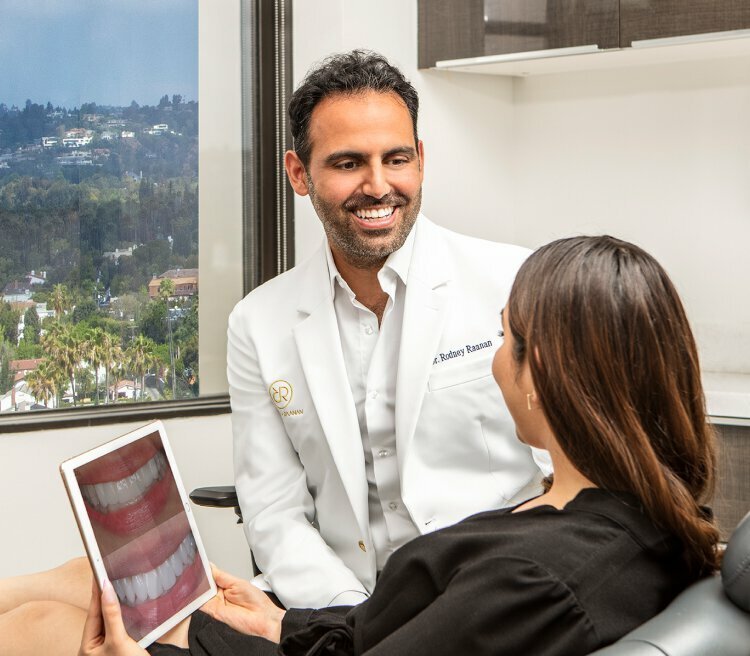
One of the most exciting moments in my practice is handing a patient a mirror after we have transformed their smile. The reaction is almost always a mix of joy and relief. However, before we ever get to that reveal, there is a very practical question that almost everyone asks me during our initial consultation: “Dr. Raanan, I love the way they look, but how long do veneers last?”
It is a fair question. When you invest in your smile, you want to know that the results are going to stand the test of time. You are not looking for a quick fix; you are looking for a long-term solution that boosts your confidence for years to come.
As a cosmetic dentist who is passionate about creating natural, beautiful smiles, I am here to give you the honest, transparent truth about the lifespan of porcelain veneers. We will dive into what the science says, what actually affects durability, and the specific steps I take to ensure your smile stays flawless for as long as possible.
The Short Answer: What the Numbers Say
If you are looking for a quick timeline, here is the general consensus in the dental world: high-quality porcelain veneers typically last between 10 and 15 years. However, in my experience, that is a conservative estimate. With modern technology, superior materials, and excellent home care, it is very common for me to see veneers last 20 years or even longer.
It is important to understand that porcelain veneers are not like organic teeth—they do not “decay” in the traditional sense. They are incredibly strong ceramic shells. When they do eventually need replacement, it is usually not because the porcelain failed, but rather due to changes in the gum line or the underlying tooth structure over decades.
Data Point: The 10-Year Success Rate
You don’t just have to take my word for it. Clinical research backs up the durability of this treatment. According to a systematic review of clinical studies, porcelain veneers have an estimated survival rate of 91% over 10 years. This means that the vast majority of patients enjoy a perfect smile for a full decade without needing any major intervention.
Porcelain vs. Composite: Why Material Matters
To understand longevity, we have to talk about materials. Not all veneers are created equal. In the world of cosmetic dentistry, we primarily deal with two types: composite resin and porcelain. Understanding the difference is key to answering how long do veneers last.
Composite Resin: These are sculpted directly on the tooth. While they can look good and are less expensive, they are more porous. This means they are prone to staining from coffee, tea, and wine. Generally, composite veneers last about 4 to 8 years before they need significant touch-ups or replacement.
Porcelain: This is the gold standard, and it is what I specialize in. Porcelain is a glass-like ceramic that mimics the light-reflecting properties of natural enamel. It is incredibly dense and non-porous. This makes it highly resistant to stains. In fact, porcelain is often stronger than your natural tooth enamel.
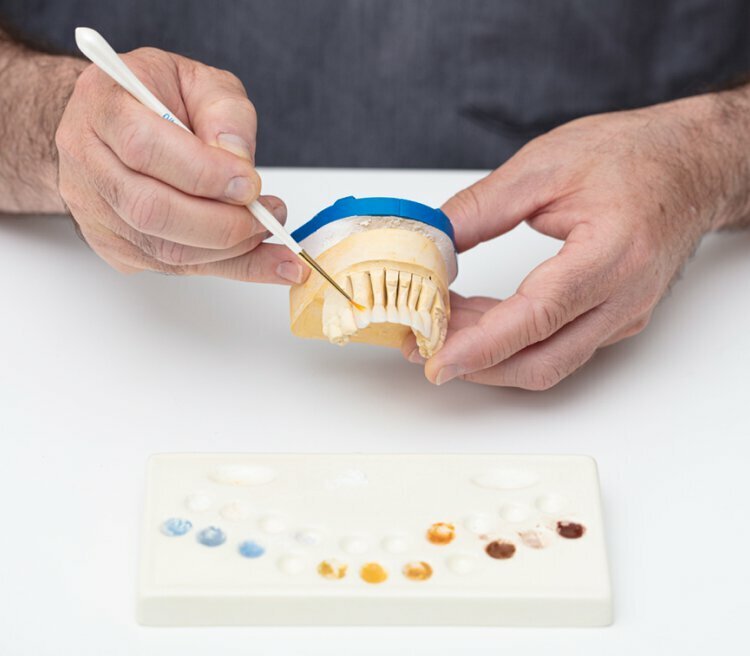
Because porcelain is fired in a lab at extremely high temperatures, it withstands the daily pressures of biting and chewing much better than resin. This material choice is the first building block of a long-lasting smile.
The “Bonding” Factor: My Role in Your Veneer’s Lifespan
Many patients think that the lifespan of their veneers depends entirely on how well they brush their teeth. While hygiene is crucial, the longevity of your veneers is actually determined the moment they are bonded to your teeth.
The skill of the dentist and the quality of the bonding protocol are massive factors. If a veneer pops off after a year or two, it usually isn’t because the patient ate something hard; it is often because the bonding process was compromised.
The Importance of Conservative Preparation
In my practice, I focus on minimally invasive dentistry. This is vital for longevity. Veneers bond much stronger to your natural tooth enamel than they do to the softer dentin layer underneath. By preserving as much of your natural enamel as possible during the preparation phase, I can create a bond that is almost unbreakable.
If a dentist is too aggressive and drills away too much natural tooth, the bond becomes weaker. A weaker bond means a higher risk of the veneer debonding or bacteria sneaking underneath the veneer years down the road. My goal is always to keep the tooth structure robust, which directly answers the question of how long do veneers last—they last longer when the foundation is solid.
Lifestyle Factors: How You Impact Longevity
Once you leave my chair with your new smile, the baton is passed to you. While porcelain is tough, it isn’t indestructible. Your daily habits play a significant role in extending the life of your laminates well beyond the 15-year mark.
The Impact of Bruxism (Teeth Grinding)
This is the number one enemy of porcelain veneers. Many people grind or clench their teeth at night without realizing it. This condition, known as bruxism, exerts hundreds of pounds of pressure on your teeth.
While porcelain is strong, constant grinding can eventually cause chips or fractures. If I suspect you grind your teeth, or if we want to be extra cautious, I will always recommend a custom night guard. This is a small piece of plastic worn while you sleep that acts as a shock absorber. It is a simple, low-cost insurance policy for your smile.
Dietary Habits
You can eat almost anything with veneers, but you should use common sense. I always tell my patients: “If you wouldn’t bite it with your natural teeth, don’t bite it with your veneers.”
- Ice: Chewing on ice is a habit that can crack natural teeth and veneers alike.
- Hard Candy: Biting down on hard candies creates pinpoint pressure that can be damaging.
- Non-Food Items: Never use your teeth as tools to open packages, tear tape, or uncork bottles. This is the fastest way to shorten the lifespan of your cosmetic work.
Maintenance: Keeping the Shine Alive
One of the best things about porcelain veneers is that they are low maintenance. You don’t need special toothpastes or complex machinery to keep them clean. However, consistency is key.
You must brush twice a day and floss daily. Even though the porcelain cannot get a cavity, the tooth structure underneath it still can. If you get a cavity at the gum line where the veneer meets the tooth, we may have to remove the veneer to treat the decay. That is a situation we want to avoid.
I also recommend using a non-abrasive toothpaste. Some “whitening” toothpastes contain gritty particles meant to scrub stains off natural teeth. Since porcelain doesn’t stain easily, you don’t need that grit. In fact, over many years, abrasive paste can scratch the surface glaze of the porcelain, making it look dull.
For more details on maintaining cosmetic dental work, the WebMD guide to Dental Veneers offers excellent general advice on what to expect regarding care and procedure details.
Signs It Might Be Time for Replacement
Even with the best care, nothing lasts forever. It is helpful to know what to look for as your veneers age. Most of the time, replacement is not an emergency; it is a cosmetic choice made when the smile no longer looks its best.
Gum Recession
As we age, our gums naturally recede slightly. Over 15 or 20 years, this might reveal the margin where the veneer meets the tooth root. While this isn’t a health issue, some patients don’t like the aesthetic look of the gum line shifting, and they choose to replace the veneers to match the new gum position.
Chips or Cracks
Small chips can sometimes be smoothed out, but significant fractures usually require the veneer to be replaced. This is rare with porcelain but can happen with trauma (like a sports injury).
Data Point: Long-Term Survival
When we look at the very long term, the numbers are still encouraging. Studies indicate that approximately 83% of porcelain veneers are still functioning perfectly after 20 years. This statistic highlights that for many patients, veneers are a once or twice-in-a-lifetime procedure, not something that requires constant redo.
Why “Cheap” Veneers Don’t Last
In the age of social media, I see many advertisements for bargain dental tourism or quick-fix veneer techinques. I cannot stress enough that you get what you pay for.
When the price is incredibly low, costs are being cut somewhere. Usually, this happens in two areas:
- The Lab: High-end veneers are hand-layered by master ceramists to look like real teeth. Cheap veneers are often machine-milled from monochromatic blocks that look flat and fake.
- The Bonding: Discount dentistry often rushes the bonding process. Proper bonding requires isolation, specific humidity control, and high-grade adhesives. Rushing this leads to leaks, sensitivity, and veneers falling off within months or a few years.
Fixing bad dental work is always more expensive and more complex than doing it right the first time. Investing in quality initially ensures that when you ask “how long do veneers last,” the answer is measured in decades, not months.
My Commitment to Your Long-Term Smile
When you come to my practice, I view your smile as a collaborative masterpiece. My job is to engineer the veneers perfectly to fit your bite and your face. Your job is to keep them clean and protect them from grinding.
I take great pride in the fact that my patients rarely come back with failures. Instead, they come back for their regular cleanings, smiling just as brightly as they did on the day we placed their veneers. We monitor your bite at every check-up to ensure that no uneven pressure has developed that could shorten the lifespan of the porcelain.
The Final Verdict on Durability
So, to circle back to the question: How long do veneers last? If you choose high-quality porcelain, have them placed by an expert who respects your natural biology, and take care of them with basic common sense, you can expect them to last 15 to 20 years—and quite possibly for the rest of your life.
They are a durable, stain-resistant, and beautiful solution for transforming your smile. While it is a significant investment, the longevity makes it one of the most valuable things you can do for your self-confidence.
If you are ready to see if porcelain veneers are right for you, or if you have old veneers that you think might need an update, I would love to meet you. Let’s create a smile that is built to last.