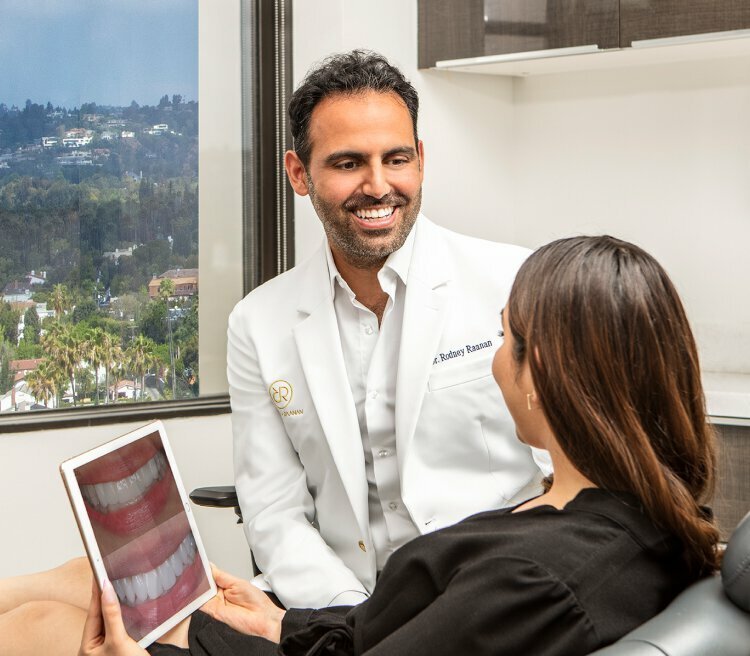
When patients walk into my Beverly Hills practice, one of the most common questions I hear involves a battle between two titans of cosmetic dentistry. Everyone wants a straighter, brighter smile, but the path to getting there isn’t always clear. You look in the mirror and see teeth that are slightly rotated, perhaps a bit crowded, or maybe overlapping. You know you want a change, but you are stuck at a crossroads: Invisalign vs Veneers. Which one is actually going to fix your crooked teeth better?
It is a fantastic question, and the answer isn’t just a simple “this one is better.” As a cosmetic dentist, I look at every smile as a unique puzzle. The right choice depends entirely on the current state of your oral health, your timeline, and your ultimate aesthetic goals. Today, I want to take a deep dive into these two popular treatments. We will explore how they work, the pros and cons of each, and help you understand which method—or perhaps a combination of both—is the right ticket to your dream smile.
Understanding the Contenders: What Are They?
Before we can decide which option wins the fight against crooked teeth, we need to understand exactly what we are working with. While both treatments improve the appearance of your smile, they do so in fundamentally different ways.
What is Invisalign?
Invisalign is a brand of clear aligners. Think of it as the modern, invisible cousin of traditional metal braces. Instead of using wires and brackets to pull your teeth into place, Invisalign uses a series of custom-made, clear plastic trays. You wear these trays over your teeth for about 20 to 22 hours a day.
Every week or two, you switch to a new set of trays. Each new set is slightly different, gently pushing your teeth into a straighter position over time. It is an orthodontic treatment, meaning its primary job is to physically move your teeth through your jawbone into the correct alignment.
What are Porcelain Veneers?
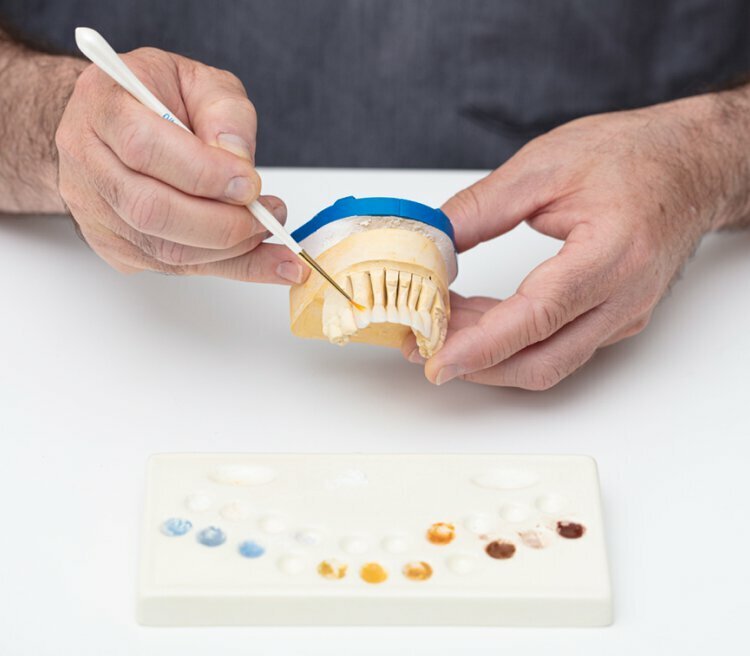
Porcelain veneers are thin shells of medical-grade ceramic that are attached to the front surfaces of your teeth. Unlike Invisalign, veneers do not move your teeth. Instead, they mask the imperfections underneath. I custom-design these shells to match the color, shape, size, and length that fits your face perfectly.
When we place veneers, we are essentially giving the tooth a new “face.” They are incredibly versatile and can hide chips, cracks, discoloration, and yes, the appearance of crookedness. This is often referred to as “instant orthodontics” because it makes the teeth look straight without actually moving them.
Invisalign vs Veneers: The Core Differences
When you are weighing Invisalign vs Veneers, you are essentially choosing between correcting the foundation (Invisalign) or renovating the facade (Veneers). Let’s break this down into categories that matter most to you.
1. The Timeline: Patience vs. Instant Gratification
One of the biggest deciding factors for my patients is time. How fast do you want that perfect smile?
Invisalign: This is a journey. Because we are biologically moving teeth, we cannot rush the process too much without causing damage. The average treatment time for Invisalign is usually between 6 to 18 months, depending on how complex your alignment issues are.
Veneers: This is a sprint. The process for veneers typically takes only two to three visits over the course of a few weeks. We consult, we prep the teeth and take impressions, and then we bond the final veneers. You can walk in with crooked teeth and walk out less than a month later with a Hollywood smile.
2. The Scope of Correction
This is where the “Which corrects crooked teeth better?” question gets a nuanced answer. It depends on how crooked your teeth are.
Invisalign Wins When: You have severe crowding, crossbites, underbites, or significant gaps. If your teeth are misaligned in a way that affects your bite (how your teeth come together), Invisalign is usually the better medical choice. We need to fix the function before we worry about the form.
Veneers Win When: You have minor misalignment, small gaps, or one or two teeth that are slightly rotated. In these cases, shaving a tiny amount of enamel and placing a veneer can make the tooth look perfectly straight instantly. However, if teeth are extremely crooked, we cannot just put veneers on them, or the veneers would end up looking bulky and thick.
Data Point: The Rise of Clear Aligners
To give you an idea of how popular moving teeth has become, the global clear aligners market size was valued at significantly high numbers recently. According to recent industry analysis, the clear aligner market size was valued at over $4 billion in 2022 and is expected to grow rapidly. This shows that millions of adults are opting to move their teeth structurally rather than just covering them up.
The Aesthetics: Natural Look vs. Perfection
At my practice, aesthetics are everything. Both options can give you a stunning result, but the “flavor” of the result is different.
With Invisalign, you are keeping your natural teeth. Once they are straight, they will look great, but they will still be your teeth. If you have chipped edges, ridges, or deep internal staining (discoloration that whitening can’t fix), Invisalign will straighten the teeth, but those flaws will still be there. You might need some bonding or whitening afterward to get the “perfect” look.
With Veneers, we have total control over the aesthetics. I can change the color to a bright, permanent white. I can change the shape to be more masculine or feminine. I can lengthen teeth that have been worn down by grinding. Veneers offer a comprehensive makeover that goes beyond just alignment. They are stain-resistant, meaning your coffee and wine habits won’t dull your smile as easily as they do natural enamel.
Durability and Maintenance
How you live with your new smile is just as important as how you get it.
Living with Invisalign
The discipline required for Invisalign is real. You must wear the trays for at least 22 hours a day. You have to remove them to eat or drink anything other than water. If you are a grazer who likes to snack throughout the day, this can be a lifestyle adjustment. You also have to brush your teeth before putting the trays back in to avoid trapping bacteria against your enamel.
Maintenance: After treatment, you must wear a retainer at night for the rest of your life to prevent teeth from shifting back.
Living with Veneers
Veneers are much more “set it and forget it” in terms of daily routine. You brush and floss them just like natural teeth. However, they are not indestructible. You shouldn’t use your teeth as tools to open packages, and if you grind your teeth at night, I will insist you wear a nightguard to protect the porcelain.
Longevity: While veneers are long-lasting, they are not immortal. High-quality porcelain veneers typically last 10 to 15 years, sometimes longer with excellent care, but they will eventually need to be replaced.
Data Point: Patient Satisfaction
It is important to know that satisfaction rates in cosmetic dentistry are incredibly high. A study published regarding patient satisfaction with porcelain veneers showed that over 90% of patients were satisfied with the aesthetic outcome of their treatment even years after the procedure. This indicates that while veneers are an investment, they rarely lead to regret when done correctly.
The Cost Factor
I know cost is always a major consideration. Generally speaking, the cost of Invisalign is comparable to the cost of braces, usually falling within a specific range for the full treatment regardless of how many trays you need.
Veneers, on the other hand, are priced per tooth. If you only need two or four veneers to fix a cosmetic issue, the cost might be lower than a full Invisalign treatment. However, if you are looking for a full smile makeover (usually 8 to 10 veneers on the top arch), the price will significantly exceed the cost of Invisalign.
The Hybrid Approach: The Best of Both Worlds?
Here is a secret that many people don’t realize: sometimes the answer isn’t Invisalign vs Veneers, but rather Invisalign and Veneers. This is actually one of my favorite approaches for complex cases.
Imagine a patient with very crowded teeth who also has chips and severe discoloration. If we only do veneers, we would have to drill away too much healthy tooth structure to make the veneers fit straight. If we only do Invisalign, the teeth will be straight, but they will still be chipped and gray.
In this scenario, I recommend a short course of Invisalign first. We move the teeth into a better position—perhaps not 100% perfect, but 80% there. This allows me to be very conservative with the tooth preparation. Once the teeth are better aligned, we place thin, minimal-prep veneers to perfect the shape and color. This preserves the health of your teeth while delivering the ultimate aesthetic result.
Which is Better for You? A Quick Checklist
To help summarize the Invisalign vs Veneers debate, review this checklist based on your specific issues:
- Choose Invisalign if:
- Your main issue is crookedness or bite alignment.
- Your teeth are generally healthy, well-shaped, and white.
- You want to keep your natural tooth structure intact.
- You are patient and can wait 6-12 months for results.
- Choose Veneers if:
- You have gaps, chips, or stains in addition to minor crookedness.
- You want a permanent change in tooth color and shape.
- You want fast results (within a month).
- You do not want the hassle of taking trays in and out.
The Impact on Your Confidence
Regardless of which method you choose, the impact of correcting crooked teeth goes far beyond the physical. I have seen patients who spent years hiding their smiles suddenly light up the room. Correcting your smile can improve your social interactions, your professional confidence, and your overall self-esteem. Read more about the benefits of teeth straightening and different options here.
When you are comfortable with your smile, you smile more often. And when you smile more often, the world reacts to you differently. It is a positive feedback loop that starts with making a decision to prioritize yourself.
Making Your Final Choice
Ultimately, the battle of Invisalign vs Veneers is one where the winner is determined by your unique anatomy and goals. There is no one-size-fits-all in high-end cosmetic dentistry. If your teeth are severely misaligned, I will almost always steer you toward Invisalign first to protect the integrity of your bite. If your alignment issues are minor but you dislike the shape and color of your teeth, veneers are likely the superior option.
The best way to know for sure is to sit down with a professional. We need to take x-rays, look at your bite, and discuss what you see when you look in the mirror. Technology today allows us to simulate outcomes so you can see what you would look like with Invisalign versus what you would look like with veneers before you ever commit to a procedure.
Your smile is your signature. Whether we straighten it with clear aligners or perfect it with porcelain, the goal remains the same: a healthy, beautiful, and confident you. If you are ready to stop wondering and start transforming your smile, I invite you to come in and let’s plan your transformation together.