When you look in the mirror, you want to see a smile that looks like you. You do not want to see dental work. You want to see teeth that sparkle, reflect light, and feel natural. This is the gold standard I strive for with every single patient who walks into my practice. When we discuss restoring a damaged tooth or enhancing a smile, one of the most common questions I hear is about material selection. specifically, patients want to know the winner in the battle of Zirconia vs Porcelain Crowns.
It is a fantastic question. Technology in dentistry has moved so fast in the last decade that the answer isn’t as simple as it used to be. Both materials have incredible strengths, and both have specific applications where they shine. However, if your main goal is that hyper-realistic, “I can’t believe that’s a crown” look, we need to dive deep into how these materials interact with light, their texture, and how they perform in the mouth.
In this guide, I am going to walk you through everything you need to know about these two powerhouses of cosmetic dentistry. We will look at the science, the art, and the durability of each to help you understand which choice is right for your unique smile.
Understanding the Basics: What Are We Working With?
Before we compare them, I want to make sure you understand exactly what these materials are. It is not just about “white teeth.” It is about the composition of the material that will be part of your body for years to come.
The Artistry of Porcelain Crowns
Porcelain has been the darling of cosmetic dentistry for a long time. When we talk about porcelain crowns, we are usually referring to a glass-ceramic material. Think of the finest china, but much stronger and reinforced for medical use. The most popular type we use today is often lithium disilicate (commonly known as E-max).
The primary reason dentists and patients love porcelain is its uncanny ability to mimic natural tooth enamel. Your natural teeth are not opaque blocks of white; they are translucent. Light enters the enamel, bounces around, and reflects back out. Porcelain does this beautifully.
The Strength of Zirconia Crowns
Zirconia is a different beast entirely. It is a metal oxide (zirconium dioxide), which technically makes it a type of ceramic, but it shares properties with titanium. It is incredibly tough. In fact, in the dental world, we often refer to it as “ceramic steel.”
Traditionally, zirconia was used mostly for the frameworks of bridges or for back teeth where biting forces are heavy. In the past, it was very opaque and bright white—it looked a bit like a chiclet. However, modern manufacturing has changed the game, creating “high-translucency” zirconia that looks much better than the older versions.
Zirconia vs Porcelain Crowns: The Aesthetic Showdown
This is usually the deciding factor for my patients. Which one looks more natural? If we are strictly judging based on the ability to replicate the subtle nuances of a natural tooth, Porcelain usually wins the aesthetics category.
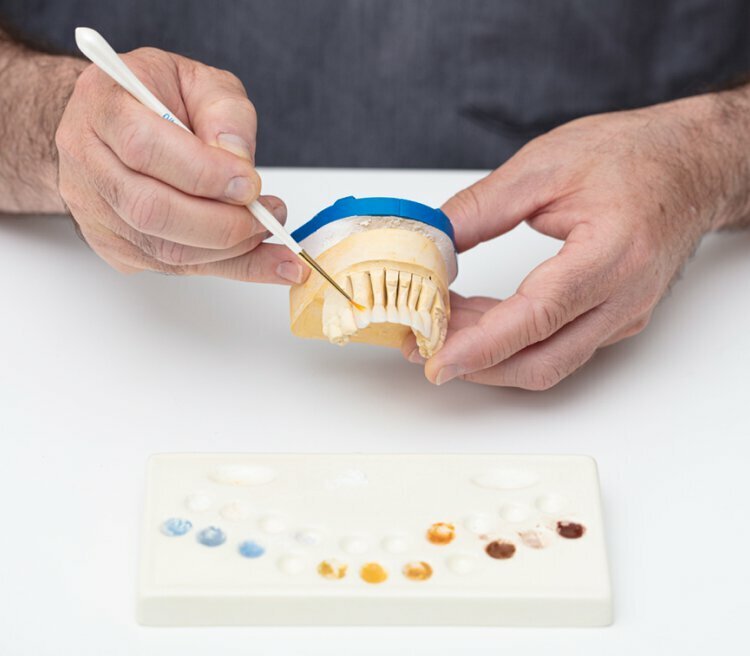
Here is why: layering. When I create a porcelain crown, I can layer different shades of porcelain powders by hand. I can add a little blue transparency at the biting edge (just like a real tooth), a warmer yellow tone near the gum line, and white highlights in the middle. This depth makes the tooth look alive.
Zirconia, while much improved, is often “monolithic,” meaning it is milled from a single block of material. While we can paint glaze on the outside to make it look pretty, it sometimes lacks that deep, internal glow that porcelain possesses. However, for many patients, high-quality translucent zirconia is virtually indistinguishable from natural teeth to the untrained eye.
The Translucency Factor
Let’s talk about light. Natural enamel is semi-translucent. When you smile in the sunlight, the light passes through the edges of your teeth. Porcelain matches this property almost perfectly. It allows light to diffuse through the crown, blending the restoration seamlessly with your neighboring teeth.
Zirconia is naturally denser and more opaque. While newer formulas are more translucent than before, they still reflect more light than they absorb compared to porcelain. If you have a single crown on a front tooth (a central incisor), matching it to your natural neighbor is one of the hardest challenges in dentistry. In this specific scenario, I almost always lean toward porcelain because it allows me to match the exact optical properties of the adjacent natural tooth.
Durability: Where Zirconia Takes the Lead
While porcelain is beautiful, it is glass. And like glass, it can fracture if subjected to extreme pressure. This is where the Zirconia vs Porcelain Crowns debate takes a turn toward functionality.
If you grind your teeth at night (bruxism) or if you have a very heavy bite, porcelain might be at risk of chipping over time. Zirconia is virtually indestructible in the mouth. It can withstand incredible biting forces without cracking.
Data Point 1: Flexural Strength
To give you a concrete idea of the difference, we measure strength in MegaPascals (MPa). A standard porcelain (lithium disilicate) crown typically has a flexural strength between 360 and 400 MPa. This is plenty strong for normal chewing. However, modern Zirconia boasts a flexural strength ranging from 900 to 1200 MPa. That is roughly three times the strength of standard porcelain, making it an absolute powerhouse for molars and heavy grinders.
The Middle Ground: Layered Zirconia
You might be thinking, “I want the strength of zirconia but the beauty of porcelain.” Well, we can actually do that. This is called a Porcelain-Fused-to-Zirconia (PFZ) crown.
In this process, we use a strong zirconia core (the coping) that sits over your tooth, and then we stack beautiful, translucent porcelain over the top of it. This gives us the best of both worlds—the durability of a metal-oxide core and the aesthetic brilliance of glass ceramic. However, there is a catch. While the core won’t break, the porcelain layer on top can still chip off if you bite into something too hard. It requires a skilled hand to ensure the bond between the two materials is perfect.
Biocompatibility and Sensitivity
I always prioritize how your body reacts to new materials. The good news is that both zirconia and porcelain are highly biocompatible. This means your gum tissue generally accepts them very well. You won’t see the angry, red, inflamed gum lines that used to be common with old-fashioned metal crowns.
However, because zirconia is milled so precisely using digital technology, the fit is often microscopic in its accuracy. This can prevent bacteria from sneaking under the crown. Furthermore, since zirconia is a poor conductor of heat and cold, some patients report less temperature sensitivity with zirconia crowns compared to other materials.
Preparation: How Much Tooth Do We Remove?
As a conservative dentist, I want to save as much of your natural tooth structure as possible. This is another area where the materials differ.
Because zirconia is so strong, we can make the crown very thin—sometimes as thin as 0.6mm—and it will still hold up. This means I have to remove less of your natural tooth to make room for the crown. Porcelain requires a slightly thicker layer (usually at least 1.0mm to 1.5mm) to ensure it doesn’t crack. If preserving your natural tooth structure is the absolute highest priority, and aesthetics are secondary (like on a back molar), zirconia allows for a more conservative preparation.
Longevity and Wear on Opposing Teeth
How long will they last? Both materials can last 10 to 15 years, or even longer with excellent hygiene. But we also have to care about the teeth opposite the crown. If a material is too hard, it can chew away your natural enamel on the opposing arch.
Historically, older zirconia was very abrasive. It was like sandpaper against natural teeth. Today, highly polished zirconia is actually very kind to opposing teeth—sometimes even smoother than porcelain. Porcelain is generally safe, but if the glaze wears off and the rough ceramic is exposed, it can become abrasive. This is why regular check-ups with me are vital; I can polish your crowns to ensure they remain smooth and gentle on your natural bite.
Data Point 2: Survival Rates
Recent clinical studies have shown impressive results for both, but zirconia’s resistance to fracture stands out. A systematic review of dental restorations found that monolithic zirconia crowns have a 5-year survival rate exceeding 98%, with the primary failure being loss of retention (the crown coming loose) rather than the material breaking. Porcelain crowns also have high survival rates (over 95% at 5 years), but the incidence of minor chipping is statistically higher than with monolithic zirconia.
Making the Decision: Which One Do I Choose?
When you are sitting in my chair, how do we decide? It is never a guessing game. We look at three main factors:
- Location in the mouth: Is it a front tooth (Smile Zone) or a back tooth (Chew Zone)?
- The Bite: Do you grind your teeth? Do you have a deep bite?
- Aesthetic Demands: Are we matching a single tooth to natural neighbors, or are we doing a full smile makeover?
The Verdict for Front Teeth
For the front six teeth (the “social six”), I almost exclusively recommend Porcelain (Lithium Disilicate/E-max) or Layered Zirconia. The way light hits these teeth is critical. When you are talking to someone face-to-face, the translucency of porcelain is unmatched. It creates that hyper-natural look where the tooth seems to disappear into your smile rather than standing out.
The Verdict for Back Teeth
For molars, where no one sees the details and the crushing force of chewing is immense, Monolithic Zirconia is often the champion. It is strong, it requires less drilling, and it looks white and clean. The slight opacity doesn’t matter as much back there, and the peace of mind knowing it won’t break is invaluable.
The Role of Digital Dentistry
One reason Zirconia vs Porcelain Crowns is such a hot topic is the rise of CAD/CAM dentistry. We can now scan your teeth digitally and mill a zirconia crown in-house or at a specialized lab with micron-level precision. This eliminates the goopy impression trays of the past.
Porcelain can also be milled, but the true artistry often comes from the hand-finishing. Even with digital milling, I believe the human touch is what separates a “tooth” from a “crown.” I work with master ceramists who treat every restoration like a piece of jewelry, regardless of the material we choose.
For more insights on how these materials compare and the procedures involved, you can read more about different types of dental crowns from reputable health resources. It is always good to be informed before your consultation.
My Personal Approach to Your Smile
I don’t believe in “one size fits all.” In my practice, I often use a mix of materials. For a full mouth reconstruction, we might use high-strength zirconia for the back teeth to maintain your bite’s vertical dimension, and delicate, hand-layered porcelain for the front teeth to give you that dazzling, movie-star smile.
The goal is harmony. When people look at you, they shouldn’t say, “Nice crowns.” They should say, “You have a beautiful smile.” The material is just the tool I use to get you there.
Summary of Pros and Cons
To make it easy to digest, here is a quick breakdown of the Zirconia vs Porcelain Crowns debate:
Porcelain (E-max)
- Pros: Superior aesthetics, highest translucency, best match for natural enamel, bonds very strongly to the tooth.
- Cons: Not as strong as zirconia, requires slightly more tooth reduction, can chip under heavy pressure.
Zirconia
- Pros: Unmatched strength, fracture-resistant, conservative preparation (thinner), excellent for hiding dark underlying teeth (like after a root canal).
- Cons: Can appear more opaque/flat, difficult to adjust once cemented, harder to cut off if replacement is needed.
Final Thoughts on Choosing Your Crown
Ultimately, the choice between Zirconia and Porcelain is not one you have to make alone. That is my job. During our consultation, I analyze your bite, your aesthetic goals, and your lifestyle to recommend the perfect material for you.
Both materials have revolutionized dentistry. We are no longer choosing between “strong and ugly” or “pretty and weak.” We are choosing between “beautiful and strong” or “stunning and strong.” That is a great position to be in.
If you are considering a smile makeover or need to repair a damaged tooth, don’t get too hung up on the material names. Focus on the result. Whether we choose the artistic depth of porcelain or the resilient power of zirconia, my commitment to you is a smile that looks natural, feels comfortable, and lasts for years. I invite you to come in, and let’s design your perfect smile together.